Blockchain for Healthcare: A 2026 Primer for US Administrators

Understanding Blockchain for Healthcare: An Educational Primer for US Administrators in 2026
The healthcare landscape in the United States is perpetually evolving, driven by technological advancements, regulatory shifts, and an increasing demand for efficiency, security, and patient-centric care. As we approach 2026, one technology stands out for its potential to fundamentally reshape how healthcare data is managed, secured, and shared: blockchain. For US healthcare administrators, understanding blockchain isn’t just about keeping up with trends; it’s about strategically positioning their organizations for future success, compliance, and improved patient outcomes.
This comprehensive primer is designed to demystify blockchain technology, specifically tailored for the unique challenges and opportunities within the US healthcare sector. We will delve into what blockchain is, how it works, its specific applications in healthcare, the benefits it offers, and the hurdles that must be overcome for widespread adoption. Our goal is to equip healthcare administrators with the knowledge to make informed decisions regarding blockchain integration, ensuring their institutions remain at the forefront of innovation and patient care.
The concept of blockchain, often associated with cryptocurrencies like Bitcoin, extends far beyond digital currencies. At its core, blockchain is a distributed, immutable ledger that can record transactions between two parties efficiently, verifiably, and permanently. Imagine a digital notebook where every page is linked to the previous one, and once something is written, it can never be erased or altered. This fundamental characteristic—immutability—is what makes blockchain so revolutionary for data-intensive industries like healthcare.
For US healthcare administrators, the implications are profound. From enhancing data security and interoperability to streamlining administrative processes and reducing fraud, blockchain offers a suite of solutions to some of the industry’s most persistent problems. As regulatory bodies continue to emphasize data privacy (HIPAA compliance) and the need for seamless data exchange, blockchain emerges as a powerful tool to meet these stringent requirements while fostering a more connected and efficient healthcare ecosystem.
What Exactly is Blockchain Technology? A Deep Dive for Healthcare Professionals
To truly grasp the potential of blockchain in healthcare, it’s essential to understand its core components and how they function together. Blockchain is essentially a chain of "blocks" that contain information. Each block is cryptographically linked to the previous one, forming a secure and tamper-proof chain.
Key Components of a Blockchain:
- Blocks: These are the fundamental units of a blockchain. Each block contains a timestamp, a cryptographic hash of the previous block, and a batch of transactions. In healthcare, these "transactions" could be patient records, insurance claims, prescription details, or consent forms.
- Chains: As new blocks are created and added, they form a continuous chain. The cryptographic hash linking each block ensures that any alteration to a previous block would invalidate all subsequent blocks, making tampering virtually impossible.
- Decentralization: Unlike traditional centralized databases managed by a single entity (e.g., a hospital’s EHR system), a blockchain is distributed across a network of computers (nodes). Each node maintains a copy of the entire ledger. This decentralization eliminates single points of failure and enhances security and resilience.
- Immutability: Once a transaction is recorded on a block and added to the chain, it cannot be changed or deleted. This feature is paramount for maintaining the integrity and trustworthiness of healthcare data, ensuring an unalterable audit trail.
- Consensus Mechanisms: For a new block to be added to the chain, the majority of nodes in the network must agree on its validity. This consensus mechanism (e.g., Proof of Work, Proof of Stake) ensures that all participants have the same, verified copy of the ledger.
- Cryptography: Advanced cryptographic techniques are used to secure transactions and link blocks. This ensures data privacy and authenticity, crucial for sensitive patient health information (PHI).
Consider the current state of healthcare data management. Patient records are often fragmented across different systems, making seamless information exchange challenging and often leading to inefficiencies, errors, and delays in care. A blockchain-based system, however, could create a unified, secure, and accessible record for each patient, controlled by the patient themselves, yet accessible to authorized providers. This fundamental shift in data ownership and access has profound implications for patient empowerment and data privacy, which are top concerns for US healthcare administrators.
Types of Blockchains Relevant to Healthcare:
- Public Blockchains: Open to anyone, like Bitcoin. While highly transparent, they might not be suitable for PHI due0to privacy concerns.
- Private Blockchains: Managed by a single organization, offering more control over access and participation. This could be relevant for internal hospital systems.
- Consortium Blockchains (Federated Blockchains): Governed by a group of organizations, these are particularly promising for healthcare. A consortium of hospitals, insurance companies, and pharmaceutical firms could collaboratively manage a blockchain to share information securely and efficiently, while maintaining necessary privacy controls. This model offers a balance between decentralization and control, making it highly attractive for addressing the complex interoperability challenges faced by healthcare administrators.
The choice of blockchain type will depend heavily on the specific use case, regulatory requirements, and the level of collaboration desired among participating entities. For US healthcare administrators, consortium blockchains appear to offer the most practical and scalable solution for many of the industry’s pressing data management issues.
Transformative Applications of Blockchain in US Healthcare Administration
The theoretical underpinnings of blockchain become truly compelling when we consider its practical applications within the US healthcare system. For healthcare administrators, these applications represent opportunities to address long-standing inefficiencies, enhance security, and improve patient care.
1. Enhanced Patient Data Security and Privacy (HIPAA Compliance)
One of the most critical challenges in healthcare is safeguarding patient data while ensuring its accessibility to authorized personnel. Blockchain’s immutable and encrypted ledger system offers a robust solution. Each patient’s medical record could be stored as a series of encrypted blocks, with access controlled by cryptographic keys. Patients could grant or revoke access to their data to specific providers, giving them unprecedented control over their PHI. This approach inherently supports and strengthens HIPAA compliance by providing an unalterable audit trail of who accessed what data and when, significantly reducing the risk of data breaches and unauthorized access.
2. Improved Interoperability and Data Exchange
The lack of seamless interoperability between different electronic health record (EHR) systems is a major hurdle in US healthcare. Blockchain can act as a universal, secure layer for data exchange, allowing disparate systems to communicate and share information without compromising security or integrity. Imagine a patient moving between different healthcare providers—a primary care physician, a specialist, a hospital, and a pharmacy. With blockchain, their entire medical history could be accessible to each authorized provider in real-time, leading to more coordinated care, reduced redundant tests, and better treatment decisions. This is a game-changer for administrators striving to improve care coordination and reduce operational costs associated with fragmented data.
3. Streamlined Claims Processing and Revenue Cycle Management
The current claims processing system in healthcare is notoriously complex, slow, and prone to errors and fraud. Blockchain, coupled with smart contracts, can revolutionize this. Smart contracts are self-executing contracts with the terms of the agreement directly written into code. Once predefined conditions are met (e.g., a service is rendered, verified, and authorized), the smart contract automatically triggers payment. This can significantly reduce processing times, administrative overhead, and the potential for fraudulent claims, thereby improving revenue cycle management for healthcare organizations. For administrators, this means faster payments, reduced operational costs, and greater financial transparency.
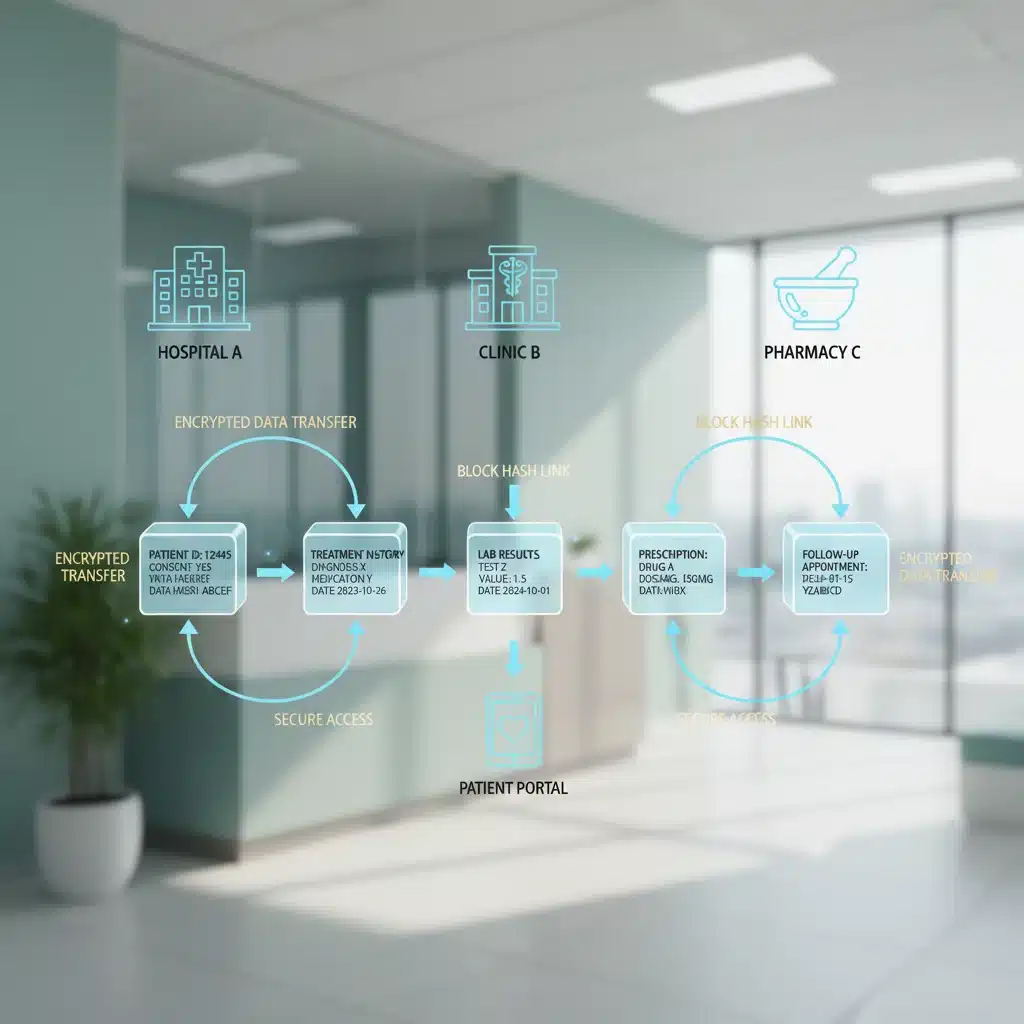
Consider a scenario where a patient undergoes a procedure. The smart contract automatically verifies the patient’s insurance eligibility, the pre-authorization for the procedure, and the completion of the service. Upon verification, the payment is initiated directly to the provider, eliminating manual review processes and delays. This level of automation and trust is invaluable for overburdened administrative teams.
4. Supply Chain Management for Pharmaceuticals and Medical Devices
The pharmaceutical supply chain is vulnerable to counterfeiting, diversion, and inefficiencies. Blockchain can provide an immutable ledger of every step a drug or medical device takes, from manufacturing to delivery to the patient. This enhances traceability, authenticity, and accountability. Administrators can ensure that their institutions are receiving legitimate products, track recalls more effectively, and optimize inventory management, leading to improved patient safety and reduced operational costs associated with supply chain disruptions.
5. Clinical Trials and Research Data Management
Clinical trials often face challenges with data integrity, participant recruitment, and transparent record-keeping. Blockchain can secure trial data, making it tamper-proof and auditable, which increases trust in research findings. It can also facilitate secure consent management for participants and streamline data sharing among researchers, accelerating drug discovery and medical advancements. For administrators overseeing research departments, blockchain offers a path to enhanced compliance and more efficient research operations.
6. Medical Credentialing and Provider Verification
Verifying the credentials of healthcare professionals is a time-consuming and often fragmented process. A blockchain-based system could store immutable records of licenses, certifications, and professional histories, making it easier and faster for healthcare organizations to verify new hires and ensure compliance. This reduces administrative burden and enhances patient safety by ensuring that all practitioners are properly qualified.
Benefits of Blockchain for US Healthcare Administrators in 2026
Beyond the specific applications, the overarching benefits of adopting blockchain technology are compelling for US healthcare administrators looking toward 2026 and beyond.
1. Enhanced Security and Trust
Blockchain’s cryptographic security and immutable ledger provide an unparalleled level of data protection. This is critical in an era of increasing cyber threats and regulatory scrutiny (e.g., HIPAA, GDPR-like considerations). The decentralized nature also means there’s no single point of attack, making the system more resilient against breaches. This builds trust among patients, providers, and payers.
2. Improved Efficiency and Cost Reduction
By automating processes (smart contracts), reducing manual paperwork, streamlining data exchange, and minimizing fraud, blockchain can significantly reduce operational costs. Administrators can reallocate resources from administrative tasks to patient care, leading to a more efficient and cost-effective healthcare system.
3. Greater Transparency and Auditability
Every transaction on a blockchain is recorded and timestamped, creating a transparent and auditable trail. This is invaluable for compliance, dispute resolution, and demonstrating accountability to regulatory bodies and patients. For administrators, this means easier audits and stronger compliance postures.
4. Empowered Patients
Blockchain can shift control of patient data back to the patients themselves. Through secure access controls, individuals can decide who sees their medical history, fostering greater patient engagement and trust in the healthcare system. This patient-centric approach aligns with modern healthcare philosophies.
5. Better Data Quality and Accuracy
The immutability of blockchain ensures that data, once recorded, cannot be altered. This leads to higher data quality and accuracy, which is crucial for clinical decision-making, research, and public health initiatives. Administrators can rely on the integrity of the data within their systems.
Challenges and Considerations for Implementation
While the potential benefits are vast, implementing blockchain in US healthcare is not without its challenges. Healthcare administrators must be aware of these hurdles to plan effectively for adoption.
1. Scalability
Processing the immense volume of data generated by the healthcare sector on a blockchain can be a significant technical challenge. Traditional blockchains can be slow. Solutions like layer-2 protocols and sharding are being developed to address these scalability issues, but they require careful consideration.
2. Interoperability with Legacy Systems
Integrating blockchain solutions with existing, often outdated, EHR and administrative systems is a complex undertaking. A phased approach and careful API development will be necessary to bridge the gap between legacy infrastructure and new blockchain platforms.
3. Regulatory and Legal Frameworks
While blockchain can enhance HIPAA compliance, the legal implications of data ownership, privacy, and accountability in a decentralized system are still evolving. US healthcare administrators will need to closely monitor regulatory developments and work with legal experts to ensure compliance.
4. Data Storage and "Right to Be Forgotten"
The immutable nature of blockchain presents a challenge when considering the "right to be forgotten" (or data deletion) as mandated by some privacy regulations (though not directly HIPAA for PHI). While actual data isn’t typically stored on the blockchain itself (rather, encrypted hashes or pointers to off-chain data are), managing deletion requests for the actual data will require careful architectural design.
5. Cost of Implementation and Maintenance
Developing, deploying, and maintaining blockchain infrastructure can be expensive, especially in the initial stages. Healthcare organizations will need to conduct thorough cost-benefit analyses and secure adequate funding for pilot programs and full-scale implementation.
6. Education and Workforce Training
There is a significant knowledge gap regarding blockchain technology within the healthcare workforce. Administrators will need to invest in educating their staff—from IT professionals to clinicians—on how blockchain systems work and how to interact with them effectively.
7. Governance and Consortium Building
For consortium blockchains, establishing clear governance models, rules for participation, and consensus mechanisms among multiple, often competing, organizations can be challenging. Building trust and collaboration among stakeholders is paramount for success.
Strategic Roadmap for US Healthcare Administrators in 2026
For US healthcare administrators looking to leverage blockchain technology by 2026, a strategic, phased approach is crucial. Here’s a suggested roadmap:
Phase 1: Education and Assessment (Now – 2024)
- Educate Leadership: Ensure board members, C-suite executives, and department heads understand the fundamentals of blockchain and its potential impact on the organization.
- Form a Blockchain Task Force: Assemble a cross-functional team including IT, legal, compliance, clinical, and administrative representatives to explore blockchain opportunities.
- Identify Pain Points: Conduct an internal audit to identify specific areas where blockchain could offer the most significant improvements (e.g., claims processing delays, data security vulnerabilities, interoperability issues).
- Research Use Cases: Investigate existing blockchain pilot programs and successful implementations in healthcare globally to learn best practices and potential pitfalls.
Phase 2: Pilot Programs and Proof-of-Concept (2024 – 2025)
- Select a Specific Use Case: Start small. Choose one well-defined problem area for a pilot project, such as secure consent management for clinical trials or a specific supply chain tracking initiative.
- Partner with Technology Providers: Collaborate with blockchain technology vendors or specialized consultancies with healthcare expertise.
- Develop a Minimum Viable Product (MVP): Create a functional, albeit limited, blockchain solution for the chosen pilot use case.
- Measure and Evaluate: Carefully track key performance indicators (KPIs) during the pilot to assess the effectiveness, scalability, and return on investment (ROI) of the blockchain solution. Gather feedback from all stakeholders.

During this phase, it’s crucial for administrators to manage expectations and understand that initial pilots may uncover unforeseen challenges. The goal is learning and iterative improvement.
Phase 3: Scaled Implementation and Ecosystem Building (2025 – 2026 and Beyond)
- Expand Successful Pilots: Based on positive results from pilot programs, strategically scale up the blockchain solution to broader departmental or organizational use.
- Foster Consortium Development: Actively engage with other healthcare organizations, payers, and pharmaceutical companies to explore the formation of healthcare blockchain consortiums for shared data initiatives. This collaborative approach is vital for achieving true interoperability.
- Invest in Workforce Training: Implement comprehensive training programs for staff who will be interacting with or managing blockchain systems.
- Continuous Monitoring and Adaptation: The blockchain and regulatory landscapes are dynamic. Establish mechanisms for continuous monitoring of technological advancements, security threats, and regulatory changes to adapt the blockchain strategy accordingly.
- Advocate for Policy Changes: Actively participate in industry discussions and advocate for policy frameworks that support responsible blockchain innovation in healthcare.
The Future of Healthcare Administration with Blockchain
By 2026, blockchain technology is poised to move beyond experimental phases and become an increasingly integral part of the US healthcare infrastructure. For administrators, this means a shift towards more data-driven, secure, and patient-centric operations. The promise of blockchain is not just about efficiency; it’s about building a healthcare system founded on trust, transparency, and collaboration.
Imagine a future where a patient’s entire medical journey is seamlessly recorded and securely accessible across all authorized providers, from their first pediatrician visit to their latest specialist consultation. Where insurance claims are processed in minutes, not weeks, and where the authenticity of every pill and device is verifiable at a glance. This future, powered by blockchain, offers a paradigm shift for healthcare administration.
However, realizing this vision requires proactive engagement from healthcare administrators. It demands a willingness to embrace new technologies, navigate complex integrations, and foster collaborative ecosystems. The journey may be challenging, but the destination—a more secure, efficient, and patient-empowered healthcare system—is undoubtedly worth the effort.
As US healthcare administrators look towards 2026, the question is no longer "if" blockchain will impact healthcare, but "how" and "when." By understanding its fundamentals, exploring its applications, and strategically planning for its implementation, administrators can ensure their organizations are not just ready for the future, but actively shaping it.