2026 MedTech Reimbursement: Key Policy Changes & Impact

Anúncios
Navigating 2026 MedTech Reimbursement: Key Policy Changes Affecting Your Bottom Line This Quarter
Anúncios
Anúncios
The landscape of healthcare is in a perpetual state of flux, and for the MedTech industry, understanding and adapting to these changes is not merely advantageous but absolutely critical for survival and growth. As we approach 2026, the discussion around MedTech reimbursement 2026 is intensifying, bringing with it a wave of anticipated policy changes that promise to reshape how medical devices and technologies are valued, covered, and ultimately, adopted. Companies that proactively analyze these shifts and strategically position themselves will undoubtedly gain a significant competitive edge. This comprehensive guide delves into the crucial policy adjustments expected for MedTech reimbursement 2026, offering insights into their potential impact on your financial health and providing actionable strategies to ensure your organization remains resilient and prosperous.
The healthcare ecosystem is a intricate web of innovation, patient care, and economic realities. Medical technology, at the forefront of improving diagnostics, treatments, and quality of life, relies heavily on a stable and predictable reimbursement framework. Any alteration to this framework can have far-reaching consequences, affecting everything from research and development investments to market access and patient affordability. Therefore, a deep dive into the specifics of MedTech reimbursement 2026 is not just an exercise in regulatory compliance; it’s a strategic imperative for every stakeholder in the MedTech space.
The Evolving Landscape of MedTech Reimbursement: A Pre-2026 Snapshot
Before we project into 2026, it’s essential to understand the current state and the foundational changes that have been setting the stage. Over the past few years, we’ve witnessed a consistent push towards value-based care models, greater scrutiny on cost-effectiveness, and an increased emphasis on real-world evidence. These trends have already begun to shift the burden of proof from simply demonstrating safety and efficacy to proving tangible patient outcomes and economic value. The Centers for Medicare & Medicaid Services (CMS), as a primary payer, plays a pivotal role in shaping these trends, often setting precedents that private insurers eventually follow.
The transition to value-based care represents a fundamental paradigm shift. Instead of fee-for-service, where providers are reimbursed for the volume of services, value-based models tie payments to the quality of care and patient outcomes. For MedTech companies, this means that the value proposition of their devices must extend beyond clinical effectiveness to include improvements in patient quality of life, reductions in hospital readmissions, and overall cost savings to the healthcare system. This shift directly influences how MedTech reimbursement 2026 policies are likely to be formulated and implemented.
Furthermore, the acceleration of digital health technologies, including remote monitoring, AI-powered diagnostics, and telehealth platforms, has introduced new complexities into the reimbursement discussion. While these technologies offer immense potential for improving access and efficiency, their integration into traditional reimbursement structures has been a gradual process, often facing challenges related to coding, coverage, and payment rates. The policies emerging for MedTech reimbursement 2026 are expected to address these digital health advancements with more specificity.
Key Policy Changes Anticipated for 2026 MedTech Reimbursement
While the definitive policies for MedTech reimbursement 2026 are still taking shape, several key areas are expected to see significant reforms. Understanding these potential changes is crucial for proactive planning.
1. Enhanced Focus on Real-World Evidence (RWE) and Clinical Utility
Expect a stronger demand for real-world evidence (RWE) to support reimbursement claims. Regulatory bodies and payers are increasingly moving beyond traditional randomized controlled trials (RCTs) to evaluate how devices perform in diverse, real-world clinical settings. This means MedTech companies will need to invest more in post-market surveillance, registries, and data collection to demonstrate sustained clinical utility and cost-effectiveness. The bar for demonstrating value will be higher, requiring robust data that illustrates improved patient outcomes, reduced healthcare utilization, or superior quality of life compared to existing alternatives. This trend will be a cornerstone of MedTech reimbursement 2026 decisions.
2. Refinements in Coverage and Payment for Digital Health Technologies
The rapid growth of digital health has outpaced reimbursement frameworks. For MedTech reimbursement 2026, we anticipate more formalized guidelines for the coverage and payment of software as a medical device (SaMD), remote therapeutic monitoring (RTM), and other digital health solutions. This could involve new CPT codes, clearer definitions of what constitutes a reimbursable digital service, and specific criteria for demonstrating clinical efficacy and patient engagement. Companies offering digital health solutions must prepare for increased scrutiny on data security, interoperability, and the tangible impact on patient care and system efficiency.
3. Evolving Pathways for Breakthrough Devices and Innovative Technologies
CMS has previously introduced initiatives like the Medicare Coverage of Innovative Technology (MCIT) pathway, aiming to accelerate access to breakthrough devices. While MCIT faced challenges, the underlying intent to streamline access for truly innovative technologies remains. For MedTech reimbursement 2026, we might see revised or new expedited pathways that balance rapid patient access with rigorous evidence generation requirements. Companies with breakthrough designations should closely monitor these developments, as they could offer significant advantages in market entry and reimbursement.
4. Greater Emphasis on Health Equity and Social Determinants of Health (SDOH)
The healthcare industry is increasingly recognizing the impact of social determinants of health (SDOH) on patient outcomes. Future MedTech reimbursement 2026 policies are likely to incorporate considerations for health equity, potentially incentivizing devices and technologies that address disparities in care access or outcomes for underserved populations. This could influence how value is defined and how reimbursement rates are structured, encouraging innovation that benefits a broader spectrum of society.
5. Potential Changes to New Technology Add-on Payments (NTAP) and DRG Adjustments
New Technology Add-on Payments (NTAP) have been crucial for hospitals adopting new, costly technologies. While NTAP is reviewed annually, for MedTech reimbursement 2026, we could see adjustments to the criteria, duration, or payment amounts. Similarly, Diagnostic Related Group (DRG) payments, which bundle payments for hospital stays, might undergo revisions to better accommodate the costs associated with advanced medical devices, particularly those with high upfront costs but long-term benefits. MedTech manufacturers need to understand how their products fit within these payment structures and advocate for appropriate adjustments.
Impact on Your Bottom Line: Financial Implications for MedTech Companies
The anticipated changes in MedTech reimbursement 2026 are not merely administrative hurdles; they have direct and significant financial implications for device manufacturers, distributors, and even healthcare providers. Understanding these impacts is the first step towards mitigating risks and capitalizing on opportunities.
Increased R&D and Clinical Trial Costs
The heightened demand for RWE and more robust clinical utility data means that the cost of research and development, as well as post-market studies, is likely to increase. Companies will need to allocate greater resources to gather comprehensive data sets that not only prove safety and efficacy but also demonstrate long-term value and cost-effectiveness in real-world settings. This could extend the development timeline and increase the financial outlay before a device achieves widespread reimbursement.
Pressure on Pricing and Profit Margins
As payers focus more on value, there will be continued pressure on pricing. Devices that cannot clearly demonstrate superior outcomes or significant cost savings compared to existing alternatives may face challenges in securing favorable reimbursement rates. This could lead to tighter profit margins, forcing companies to optimize their operational efficiencies and justify their pricing with compelling evidence of value. The dynamics of MedTech reimbursement 2026 will necessitate a stronger value-based pricing strategy.
Strategic Portfolio Prioritization
With evolving reimbursement rules, companies may need to re-evaluate their product pipelines and portfolios. Projects that are unlikely to meet the new RWE or value-based criteria might be de-prioritized, while investments in technologies that align with future reimbursement trends, such as those addressing SDOH or integrating digital health, could increase. This strategic re-prioritization is crucial for long-term viability under the new MedTech reimbursement 2026 framework.
Market Access Challenges and Opportunities
While stricter reimbursement criteria can create market access challenges, they also present opportunities for companies that excel in demonstrating value. Devices with strong RWE and clear clinical utility are more likely to gain favorable coverage and broader adoption. Conversely, products that fail to meet these new standards may struggle to penetrate the market, even if they possess clinical benefits. Navigating MedTech reimbursement 2026 will require sophisticated market access strategies.
Strategic Imperatives for MedTech Companies Ahead of 2026
To thrive in the evolving MedTech reimbursement 2026 environment, companies must adopt a proactive and multi-faceted strategic approach. Waiting for policies to be finalized before reacting will put organizations at a significant disadvantage.
1. Invest in Robust Real-World Evidence Generation
This is perhaps the most critical imperative. Begin designing and implementing RWE studies now. This includes leveraging electronic health records (EHRs), patient registries, claims data, and patient-reported outcomes (PROs). Data collection should be integrated into product development and post-market surveillance. The goal is to generate compelling evidence that quantifies the clinical, economic, and humanistic value of your devices in diverse patient populations and care settings. This continuous evidence generation will be key for successful MedTech reimbursement 2026.
2. Strengthen Health Economics and Outcomes Research (HEOR) Capabilities
Develop or enhance your internal HEOR expertise. This team will be instrumental in conducting cost-effectiveness analyses, budget impact models, and comparative effectiveness research. Their work will provide the economic justification necessary to support reimbursement applications and negotiations with payers. A strong HEOR function will be indispensable in articulating the value proposition of your technology in terms of healthcare system savings and improved patient quality of life, directly impacting MedTech reimbursement 2026.
3. Embrace Digital Health Integration and Interoperability
For companies with digital health components or those considering them, prioritize seamless integration and interoperability with existing healthcare IT systems. Payers will favor solutions that can easily share data, reduce administrative burden, and contribute to a holistic view of patient care. Furthermore, clearly define how your digital health solutions improve access, adherence, and outcomes, providing the necessary data to support reimbursement claims under new MedTech reimbursement 2026 policies.
4. Engage Proactively with Policy Makers and Payers
Don’t wait for policies to be set in stone. Engage with CMS, legislative bodies, industry associations, and private payers through advocacy efforts, pilot programs, and feedback mechanisms. Share your insights on the value of your technologies and advocate for reimbursement frameworks that foster innovation while ensuring patient access. Early and consistent engagement can help shape favorable policies for MedTech reimbursement 2026.
5. Develop Comprehensive Market Access and Reimbursement Strategies
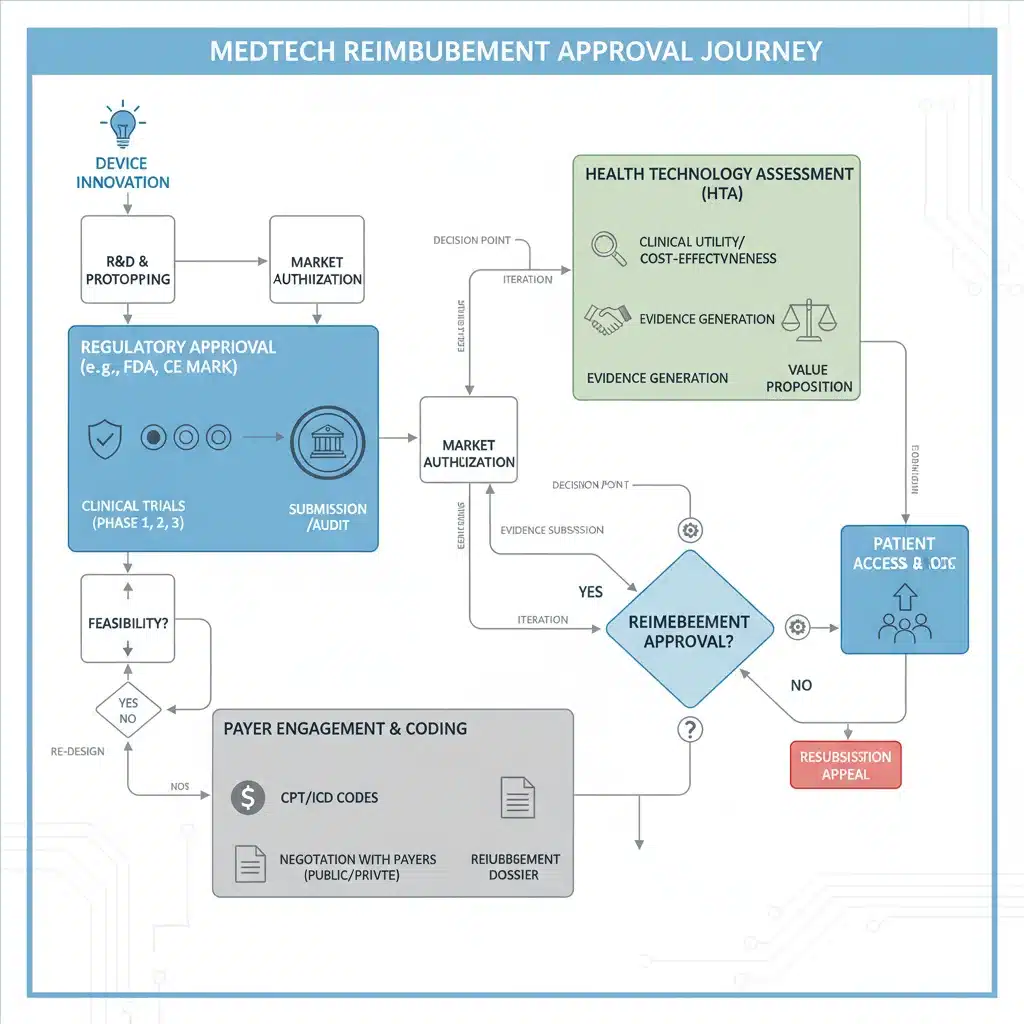
This involves more than just obtaining a CPT code. It requires a holistic strategy that considers all aspects of market entry and sustained access. This includes understanding payer specific policies, developing payer value dossiers, training sales teams on reimbursement nuances, and establishing patient support programs. Your strategy for MedTech reimbursement 2026 must be dynamic and adaptable, accounting for regional and payer-specific variations.
6. Foster Strategic Partnerships
Collaborate with healthcare providers, academic institutions, and even other MedTech companies. Partnerships can facilitate RWE generation, pilot programs for new technologies, and shared advocacy efforts. For example, partnering with hospital systems that are leaders in value-based care can provide invaluable insights into how your devices contribute to their performance metrics, strengthening your case for MedTech reimbursement 2026.

Challenges and Opportunities for MedTech Reimbursement 2026
While the road to 2026 is paved with challenges, it also presents significant opportunities for companies that are prepared and agile. The challenges primarily revolve around increased regulatory scrutiny, the need for more sophisticated data, and potential pricing pressures. However, these very challenges can act as catalysts for innovation and market differentiation.
Challenges:
- Data Overload and Interpretation: The sheer volume of data required for RWE can be overwhelming. Companies need robust data analytics capabilities to effectively collect, interpret, and present this information in a way that resonates with payers.
- Payer Heterogeneity: Despite CMS setting trends, private payers often have their own unique coverage policies and payment methodologies, creating a complex and fragmented reimbursement landscape.
- Demonstrating Long-Term Value: For many innovative devices, the full economic and clinical benefits may accrue over several years. Proving this long-term value upfront can be challenging but essential for MedTech reimbursement 2026.
- Regulatory Uncertainty: The exact details of 2026 policies are still subject to change, creating an environment of uncertainty that requires constant monitoring and adaptability.
Opportunities:
- Differentiation Through Value: Companies that can clearly demonstrate superior value, not just clinical efficacy, will differentiate themselves in a crowded market and command better reimbursement.
- Innovation in Digital Health: The push for more formalized digital health reimbursement creates a fertile ground for companies to innovate in areas like remote patient monitoring, AI diagnostics, and personalized medicine, positioning them favorably for MedTech reimbursement 2026.
- Market Leadership: Proactive engagement and strategic planning can establish companies as thought leaders and trusted partners with payers and policymakers, influencing the future direction of reimbursement policy.
- Improved Patient Outcomes: Ultimately, the focus on value and RWE drives better patient outcomes. Companies that align their innovations with these goals contribute to a healthier society while securing their business future.
Preparing Your Team for MedTech Reimbursement 2026
Beyond strategic planning, ensuring your internal teams are equipped to navigate the changes is paramount. This involves cross-functional collaboration and continuous education.
- Sales and Marketing: Equip your sales and marketing teams with a deep understanding of the value proposition, economic benefits, and reimbursement pathways for your products. They must be able to articulate not just clinical features but also the financial impact and patient outcomes.
- R&D and Clinical Affairs: Foster a culture where RWE generation is integral to product development. Clinical trials should be designed with reimbursement criteria in mind, collecting data that demonstrates both clinical effectiveness and economic value.
- Regulatory Affairs: Maintain constant vigilance on emerging policies and engage with regulatory bodies. Their expertise will be vital in interpreting new guidelines and ensuring compliance.
- Finance and Legal: These teams will play a crucial role in understanding the financial implications of new policies, structuring contracts, and ensuring legal compliance within the evolving reimbursement landscape.
Cross-functional training programs focused on MedTech reimbursement 2026 will ensure that all relevant departments are aligned and working towards common strategic goals. This holistic approach will foster a more resilient and adaptable organization.
Conclusion: Positioning for Success in 2026 and Beyond
The year 2026 represents a pivotal moment for MedTech reimbursement 2026, with anticipated policy changes poised to significantly impact the industry. The shift towards value-based care, the demand for robust real-world evidence, and the integration of digital health solutions are not fleeting trends but fundamental transformations of the healthcare landscape. Companies that embrace these changes proactively, invest in comprehensive data generation, strengthen their HEOR capabilities, and engage strategically with all stakeholders will be best positioned for success.
By understanding the nuances of impending policy shifts, assessing their financial implications, and implementing robust strategic imperatives, MedTech companies can not only mitigate risks but also unlock new opportunities for innovation and growth. The future of medical technology is bright, but navigating its reimbursement pathways requires foresight, adaptability, and an unwavering commitment to demonstrating true value. Prepare now, and your organization will not just survive but thrive in the dynamic world of MedTech reimbursement 2026 and beyond.
Author