
Navigating MedTech IPO Investment: Your Guide to a 10% Return in 12 Months
The MedTech sector is a dynamic and ever-evolving landscape, offering groundbreaking innovations that promise to revolutionize healthcare. For savvy investors, initial public offerings (IPOs) in this space can present unparalleled opportunities for substantial returns. However, the complexity and specialized nature of MedTech demand a meticulous approach to investment. This comprehensive guide is designed to equip you with the knowledge and strategies necessary to evaluate MedTech IPOs effectively, aiming for a realistic and ambitious 10% return within the next 12 months. We will delve into critical evaluation criteria, market analysis techniques, and robust risk mitigation strategies, ensuring your MedTech IPO investment decisions are well-informed and strategic.
Understanding the MedTech Landscape: Why IPOs Matter
Before diving into the specifics of MedTech IPO investment, it’s crucial to grasp the fundamental drivers of this sector. MedTech encompasses a vast array of products and services, from diagnostic tools and surgical instruments to digital health platforms and advanced prosthetics. The industry is characterized by rapid technological advancements, significant research and development (R&D) expenditures, and a complex regulatory environment. These factors collectively shape the potential and pitfalls of investing in MedTech IPOs.
IPOs in the MedTech space are particularly exciting because they often represent companies at the forefront of innovation. These firms are typically bringing novel solutions to unmet medical needs, addressing critical healthcare challenges, and often operating in high-growth niches. For investors, getting in on the ground floor of such companies can lead to considerable upside. However, the nascent stage of many IPO companies also implies higher risk, as their products might still be in early commercialization phases or subject to ongoing clinical trials and regulatory approvals. A successful MedTech IPO investment hinges on accurately assessing these early-stage companies’ potential against their inherent risks.
The Allure of MedTech Innovation
The core appeal of MedTech lies in its innovation. Companies are constantly pushing boundaries, developing devices and software that improve patient outcomes, enhance diagnostic accuracy, and streamline healthcare delivery. This continuous innovation fuels market growth and creates opportunities for disruptive technologies to gain significant traction. Consider the advancements in robotic surgery, personalized medicine diagnostics, or remote patient monitoring – these are all areas where MedTech companies are making significant strides, and many of these advancements are brought to public markets through IPOs. Identifying companies with truly disruptive and patent-protected technologies is a cornerstone of a successful MedTech IPO investment strategy.
Market Dynamics and Growth Drivers
Several macro trends underpin the growth of the MedTech sector. An aging global population, rising prevalence of chronic diseases, increasing healthcare expenditure, and technological advancements all contribute to a robust demand for MedTech products and services. Furthermore, the shift towards value-based care and preventative medicine creates new avenues for MedTech companies that can demonstrate cost-effectiveness and improved patient quality of life. Understanding these overarching market dynamics is essential for evaluating the long-term viability and growth potential of a MedTech IPO investment.
Key Evaluation Criteria for MedTech IPO Investment
Achieving a 10% return in 12 months from a MedTech IPO investment requires a rigorous and systematic evaluation process. It’s not enough to simply be excited about a new technology; a deep dive into the company’s fundamentals, market position, and financial health is paramount. Here are the critical criteria to consider:
1. Product and Technology Differentiation
At the heart of every successful MedTech company is a compelling product or technology. When evaluating an IPO, ask yourself: Is the technology truly innovative? Does it address a significant unmet medical need? What are its competitive advantages? Look for strong intellectual property (IP) protection, such as patents and trade secrets, which can create a formidable barrier to entry for competitors. A product that offers a clear clinical benefit, improves efficiency, or reduces costs for healthcare providers will have a higher probability of market adoption and sustained growth. A thorough understanding of the scientific and engineering principles behind the product is crucial for a sound MedTech IPO investment.
2. Clinical Validation and Regulatory Pathway
Unlike many other sectors, MedTech products often require extensive clinical trials and regulatory approvals before they can be commercialized. This is a significant hurdle and a key risk factor. Investors must scrutinize the company’s clinical trial data: Is it robust? Are the results statistically significant? What stage of regulatory approval has the company reached (e.g., FDA clearance, CE Mark)? A company with a clear and well-defined regulatory pathway, and ideally one that has already secured key approvals, presents a much lower risk profile. Companies still in early-stage trials carry higher risk but also potentially higher reward if successful. Your MedTech IPO investment decision must weigh these factors carefully.
3. Market Opportunity and Commercialization Strategy
Even the most innovative product won’t succeed without a viable market. Assess the total addressable market (TAM) for the company’s products. Is it large enough to support significant growth? What is the company’s commercialization strategy? Do they have a strong sales and marketing team with proven experience in the healthcare sector? Partnerships with established medical device distributors or healthcare systems can be a strong indicator of future success. Understanding how the company plans to penetrate the market and scale its operations is vital for a successful MedTech IPO investment.
4. Management Team and Board of Directors
The leadership team is often a strong predictor of an IPO’s success. Look for experienced executives with a proven track record in the MedTech industry, particularly those who have successfully brought products to market and navigated regulatory challenges. A strong scientific advisory board and a diverse board of directors with relevant industry expertise also add credibility. Their vision, execution capabilities, and ability to adapt to market changes will significantly influence the company’s trajectory and, by extension, your MedTech IPO investment.

5. Financial Health and Valuation
While many MedTech IPOs are not yet profitable, a thorough review of their financial health is crucial. Examine their revenue growth, burn rate, cash on hand, and funding runway. How much capital are they raising in the IPO, and how will those funds be used? Compare the IPO valuation to similar publicly traded companies (if available) using metrics like enterprise value to sales (EV/Sales) or price to sales (P/S). Be wary of overly ambitious valuations that leave little room for upside. A prudent MedTech IPO investment requires a realistic assessment of the company’s financial standing and its potential for future profitability.
6. Competitive Landscape
The MedTech sector is highly competitive. Identify the company’s direct and indirect competitors. What are their strengths and weaknesses? How does the IPO company differentiate itself? A sustainable competitive advantage, whether through superior technology, strong IP, or established market channels, is essential for long-term success. Understanding the competitive dynamics helps in assessing the company’s ability to capture and maintain market share, which directly impacts your MedTech IPO investment.
Strategies for Targeting a 10% Return in 12 Months
Achieving a 10% return from a MedTech IPO investment within a year is an ambitious but attainable goal if approached strategically. This requires not only careful selection but also an understanding of market timing and portfolio management.
1. Deep Due Diligence and Selective Investment
The first and most important strategy is to conduct exhaustive due diligence. Do not invest in every MedTech IPO that comes to market. Be highly selective, focusing only on companies that meet stringent criteria across all the evaluation points discussed above. Look for companies with clear catalysts for growth within the next 12 months, such as anticipated regulatory approvals, product launches, or significant partnership announcements. Your MedTech IPO investment should be concentrated in high-conviction opportunities.
2. Understand IPO Pricing Dynamics
IPO pricing is a critical factor. Sometimes, IPOs are priced aggressively, leaving little room for immediate post-IPO appreciation. Other times, they are priced more conservatively, offering a better entry point. While it’s difficult for retail investors to influence IPO pricing directly, understanding the sentiment around the offering and observing initial trading can provide clues. Sometimes, waiting a few days or weeks post-IPO to see how the stock settles can be a wise strategy, avoiding the initial volatility. However, for a 10% return in 12 months, getting in at a reasonable price is key.
3. Monitor Industry Trends and Catalysts
Post-investment, continuous monitoring of industry trends and company-specific catalysts is crucial. Keep an eye on news related to regulatory changes, competitor activities, clinical trial updates, and earnings reports. Positive developments in these areas can propel the stock price upwards. Conversely, negative news can signal a need to re-evaluate your position. Active monitoring enhances your chances of hitting your 10% MedTech IPO investment target.
4. Risk Management and Portfolio Diversification
Despite thorough due diligence, MedTech IPOs carry inherent risks. It’s imperative to manage these risks effectively. Avoid putting all your capital into a single IPO. Diversify your MedTech IPO investment across several promising companies to mitigate the impact of any single underperforming stock. Set clear stop-loss orders or exit strategies to limit potential losses if the investment doesn’t perform as expected. Remember, capital preservation is as important as capital growth.
5. Long-Term Vision with Short-Term Targets
While the goal is a 10% return in 12 months, many MedTech companies are long-term growth stories. If a company continues to meet its milestones and the underlying fundamentals remain strong, consider holding beyond the initial 12-month period. However, for the specific 10% target, be prepared to lock in profits if the target is reached, or re-evaluate if the thesis changes. A flexible approach to your MedTech IPO investment is often the most successful.
Common Pitfalls and How to Avoid Them
Investing in MedTech IPOs is not without its challenges. Being aware of common pitfalls can help you navigate this complex landscape more effectively and protect your MedTech IPO investment.
1. Overemphasis on Hype
The allure of groundbreaking technology can sometimes overshadow fundamental analysis. Don’t fall prey to hype alone. A compelling story is important, but it must be backed by solid science, a clear regulatory path, and a viable commercial strategy. Always conduct your own independent research and don’t rely solely on marketing materials or analyst reports that might be overly optimistic. A rational approach to your MedTech IPO investment is critical.
2. Underestimating Regulatory Risk
The regulatory pathway for MedTech products can be long, costly, and unpredictable. Delays in approvals, unexpected clinical trial results, or new regulatory requirements can significantly impact a company’s prospects. Always assess the company’s experience with regulatory bodies and their track record in navigating these challenges. A company with a history of successful navigation through regulatory hurdles offers a more secure MedTech IPO investment.
3. Ignoring Competitive Threats
The MedTech sector is highly competitive, with established players and new entrants constantly vying for market share. A seemingly innovative product might face stiff competition from existing solutions or even newer technologies. Always evaluate the competitive landscape thoroughly and understand how the IPO company plans to maintain its edge. Without a sustainable competitive advantage, your MedTech IPO investment could be at risk.
4. Lack of Financial Discipline
Many MedTech IPOs are pre-revenue or early-revenue companies, meaning they are often unprofitable and burning cash. It’s crucial to understand their cash runway and funding needs. Will they need to raise additional capital through dilutive secondary offerings? A lack of financial discipline or a weak balance sheet can erode shareholder value. Ensure the company has a clear path to profitability or sufficient funding to reach key milestones before considering a MedTech IPO investment.
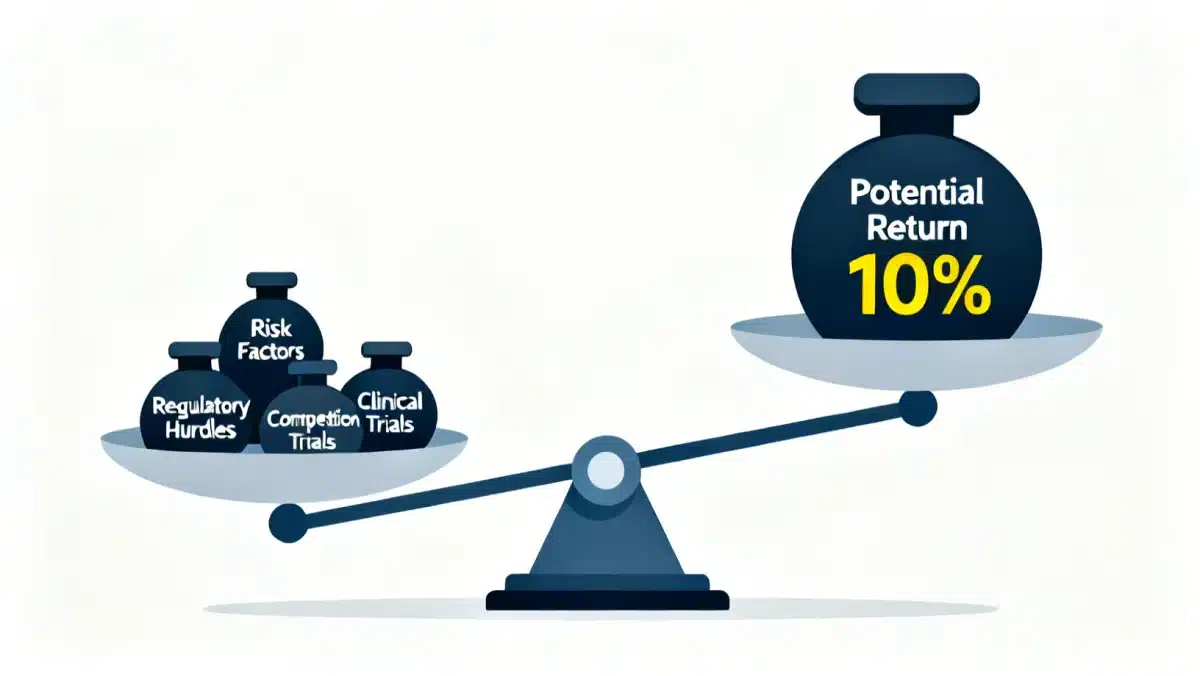
The Role of Due Diligence in Mitigating Risk
Due diligence is not merely a step in the investment process; it is the cornerstone of successful MedTech IPO investment, especially when targeting specific returns. It involves a systematic investigation into the company’s background, financial performance, market position, and potential risks. For MedTech, this extends to deep dives into clinical data, intellectual property, and regulatory history. Without thorough due diligence, investors are essentially gambling, rather than making informed decisions. This process helps in identifying red flags that might otherwise be overlooked and provides a realistic picture of the company’s true value and potential for a 10% return.
Sources for Comprehensive Due Diligence
- Prospectus (S-1 Filing): This is the primary source of information for any IPO. It contains detailed information about the company’s business, financials, risks, and management. Reading it thoroughly is non-negotiable for any serious MedTech IPO investment.
- Analyst Reports: While they should not be the sole basis of your decision, reports from reputable financial analysts can offer valuable insights and different perspectives.
- Scientific and Medical Journals: For MedTech companies, reviewing peer-reviewed publications related to their technology or clinical trials can validate their scientific claims.
- Patent Databases: Investigating the company’s patents and intellectual property protection is crucial for understanding their competitive moat.
- Industry Conferences and Expert Opinions: Attending industry events or consulting with medical professionals and industry experts can provide qualitative insights into the market and the company’s standing.
Future Outlook for MedTech IPOs and Investment Opportunities
The MedTech sector is poised for continued growth, driven by an aging global population, increasing prevalence of chronic diseases, and ongoing technological advancements. Areas such as artificial intelligence (AI) in diagnostics, personalized medicine, remote monitoring, and advanced surgical robotics are expected to see significant innovation and investment. This continuous evolution means a steady pipeline of MedTech IPO investment opportunities for those who are prepared to conduct their due diligence and manage their risks effectively.
For investors aiming for a 10% return in 12 months, staying abreast of these emerging trends is paramount. Identifying companies that are leaders in these high-growth sub-sectors, and which possess strong IP and a clear path to commercialization, will be key to unlocking significant value. The convergence of technology and healthcare is creating a fertile ground for investment, but success will ultimately belong to those who apply a disciplined and informed approach to their MedTech IPO investment strategy.
Conclusion: Mastering MedTech IPO Investment for Optimal Returns
Investing in MedTech IPOs offers an exciting avenue for capital growth, particularly for those targeting a challenging yet achievable 10% return within a 12-month timeframe. Success in this specialized sector is not a matter of luck but rather a result of meticulous research, strategic evaluation, and disciplined risk management. By focusing on product differentiation, clinical validation, market opportunity, strong management, and sound financials, investors can significantly improve their odds of selecting winning MedTech IPOs.
Remember that the MedTech landscape is continually evolving, demanding ongoing vigilance and adaptability. While the promise of innovation is strong, the inherent risks associated with early-stage companies and complex regulatory environments necessitate a cautious yet opportunistic approach. By adhering to the strategies outlined in this guide, you can navigate the intricacies of MedTech IPO investment with confidence, positioning yourself to capitalize on the sector’s growth and achieve your targeted financial returns. Your journey to a successful MedTech IPO investment begins with comprehensive understanding and ends with strategic execution.