Genomic Medicine Education: U.S. Healthcare Professionals 2026 Compliance Guide

Anúncios
Genomic Medicine Education: What U.S. Healthcare Professionals Need to Know for 2026 Compliance
The landscape of healthcare is undergoing a profound transformation, driven by advancements in genomic medicine. As we approach 2026, U.S. healthcare professionals face an increasing imperative to integrate genomic insights into routine clinical practice. This shift is not merely an evolutionary step but a revolutionary one, promising personalized treatment strategies, enhanced diagnostic accuracy, and a deeper understanding of disease etiology. However, realizing this potential hinges critically on robust Genomic Medicine Education. Without a well-informed and competently trained workforce, the promise of precision medicine will remain largely unfulfilled. This comprehensive guide will delve into the essential knowledge, skills, and ethical considerations that U.S. healthcare professionals must master to ensure compliance and deliver optimal patient care in the era of genomics.
Anúncios
Anúncios
The Accelerating Pace of Genomic Integration in Healthcare
Genomic medicine, at its core, involves using information from an individual’s genome to make clinical decisions. This field has expanded dramatically beyond rare genetic disorders to influence common diseases like cancer, cardiovascular disease, and diabetes, as well as pharmacogenomics (how genes affect a person’s response to drugs). The rapid decrease in sequencing costs, coupled with sophisticated bioinformatics tools, has made genomic data more accessible than ever. Consequently, professional organizations, regulatory bodies, and patient advocacy groups are increasingly advocating for the widespread adoption of genomic medicine across all specialties.
The year 2026 is emerging as a critical benchmark, with many anticipating that a foundational understanding of genomics will become an expected competency for U.S. healthcare professionals. This expectation is driven by several factors: the growing volume of genomic tests available, the increasing recognition of genetic factors in common diseases, and the ethical responsibility to provide evidence-based, personalized care. Therefore, investing in comprehensive Genomic Medicine Education is not just advantageous but indispensable for future practice.
Why 2026 is a Crucial Compliance Year for Genomic Medicine Education
The specific impetus for 2026 compliance stems from a confluence of policy discussions, technological readiness, and evolving standards of care. While no single federal mandate has explicitly set 2026 as a hard deadline for universal genomic competency, several indicators point towards it as a pivotal year. These include the anticipated widespread availability of direct-to-consumer genetic testing results requiring interpretation by primary care providers, the integration of genomic data into electronic health records (EHRs) becoming more standardized, and the maturation of guidelines from professional societies regarding genomic testing and counseling across various medical disciplines. Furthermore, changes in medical licensing and continuing education requirements are likely to reflect this growing need.
Healthcare systems that fail to prioritize Genomic Medicine Education risk falling behind in diagnostic accuracy, treatment efficacy, and patient safety. Patients, empowered by personal genomic data, will increasingly seek healthcare providers who can competently interpret and apply this information. Thus, understanding the implications of genomic data will transition from a specialized skill to a core competency for all healthcare professionals.
Foundational Principles of Genomic Medicine Education
Effective Genomic Medicine Education must begin with a solid grounding in foundational principles. This includes understanding the basic structure and function of DNA, RNA, and proteins, as well as the mechanisms of inheritance. Healthcare professionals need to grasp how genetic variations arise, their potential impact on biological function, and how they contribute to health and disease.
Key Concepts for All Healthcare Professionals:
- Basic Genetics and Genomics: A review of Mendelian inheritance patterns, chromosomal abnormalities, gene expression, and the central dogma of molecular biology. Understanding the difference between genetics (study of individual genes) and genomics (study of the entire genome) is crucial.
- Types of Genetic Variation: Familiarity with single nucleotide polymorphisms (SNPs), insertions/deletions (indels), copy number variations (CNVs), and structural variants. Understanding how these variations are identified and their clinical significance.
- Genomic Technologies: An overview of common genomic testing methodologies, including next-generation sequencing (NGS), microarray analysis, and PCR-based assays. Healthcare professionals don’t need to be experts in laboratory techniques but should understand the capabilities and limitations of each.
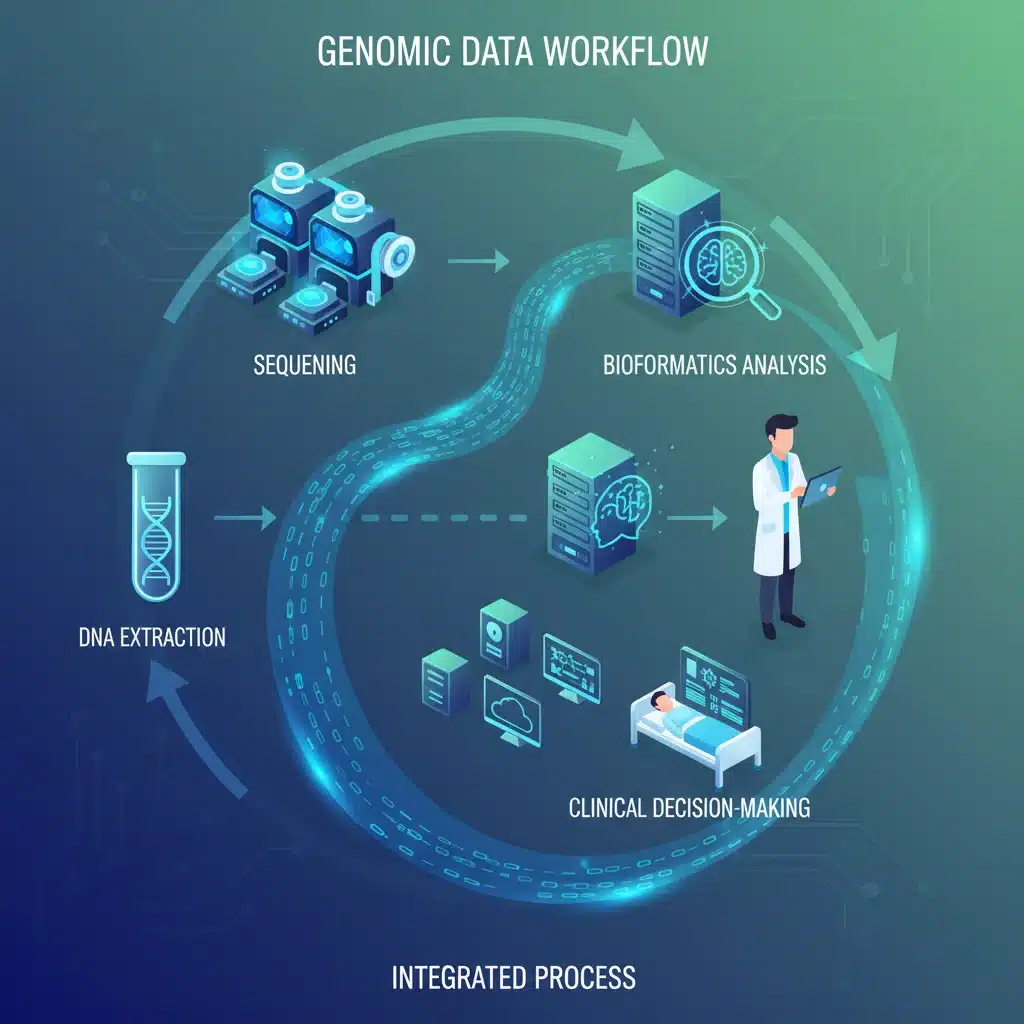
- Bioinformatics and Data Interpretation: A basic understanding of how genomic data is processed, analyzed, and interpreted. This includes recognizing the role of bioinformatics tools and databases in variant classification and clinical decision support.
- Population Genomics: Understanding how genetic variation differs across populations and its implications for health disparities and the generalizability of genomic findings.
Clinical Applications: Integrating Genomics into Patient Care
Beyond foundational knowledge, Genomic Medicine Education must equip professionals with the skills to apply genomic insights directly to patient care. This involves understanding the utility of genomic testing in various clinical scenarios and knowing how to interpret and communicate results effectively.
Specific Clinical Areas Requiring Genomic Competency:
1. Pharmacogenomics (PGx)
PGx is perhaps one of the most immediate and impactful applications of genomic medicine. It involves using an individual’s genetic information to predict their response to specific medications, thereby optimizing drug selection and dosing to maximize efficacy and minimize adverse drug reactions. Healthcare professionals need to:
- Identify patients who could benefit from PGx testing.
- Understand common pharmacogenes (e.g., CYP2D6, CYP2C19, SLCO1B1) and their impact on drug metabolism.
- Interpret PGx reports and apply findings to prescribing decisions for various drug classes (e.g., antidepressants, anticoagulants, chemotherapy).
- Educate patients about the benefits and limitations of PGx testing.
2. Cancer Genomics (Oncogenomics)
Genomic profiling of tumors has revolutionized cancer diagnosis, prognosis, and treatment. Understanding somatic (tumor) and germline (inherited) mutations is critical for personalized oncology. Key educational areas include:
- Tumor Profiling: Understanding how genomic alterations in cancer cells drive tumor growth and progression, and how this information guides targeted therapies and immunotherapies.
- Hereditary Cancer Syndromes: Recognizing familial patterns of cancer, identifying individuals at risk for inherited cancer syndromes (e.g., BRCA1/2, Lynch syndrome), and knowing when to refer for germline genetic testing and counseling.
- Liquid Biopsies: Understanding the utility of circulating tumor DNA (ctDNA) for cancer detection, monitoring, and resistance mechanisms.
3. Rare and Undiagnosed Diseases
Genomic sequencing (whole exome sequencing, whole genome sequencing) has dramatically improved the diagnostic yield for patients with rare and undiagnosed genetic conditions. Healthcare professionals must:
- Recognize clinical features suggestive of a genetic etiology.
- Understand the diagnostic odyssey faced by these patients.
- Know when to order appropriate genomic tests and how to interpret complex reports, often involving variant of uncertain significance (VUS) classifications.
- Collaborate with genetic counselors and clinical geneticists.
4. Common Complex Diseases
While the genetic contribution to common complex diseases (e.g., heart disease, diabetes, Alzheimer’s) is multifactorial, genomic insights are increasingly informing risk assessment and prevention strategies. Education should cover:
- Polygenic risk scores (PRS) and their utility and limitations in predicting disease risk.
- The interplay between genetic predisposition and environmental factors.
- Integrating genomic risk information into lifestyle modification and screening recommendations.

Ethical, Legal, and Social Implications (ELSI) of Genomic Medicine
Genomic Medicine Education would be incomplete without a thorough exploration of the ethical, legal, and social implications (ELSI) that accompany this powerful technology. Healthcare professionals are on the front lines of navigating these complex issues with patients.
Key ELSI Considerations:
- Informed Consent: Ensuring patients fully understand the implications of genomic testing, including potential secondary findings, privacy concerns, and the impact on family members.
- Privacy and Data Security: Understanding the sensitive nature of genomic data and the importance of protecting patient information from breaches or misuse. Familiarity with regulations like HIPAA and GINA (Genetic Information Nondiscrimination Act).
- Discrimination: Addressing patient concerns about potential discrimination in employment or insurance based on genetic information, and understanding the protections offered by GINA.
- Equity and Access: Recognizing and working to mitigate disparities in access to genomic testing and therapies, particularly among underserved populations.
- Return of Results and Secondary Findings: Policies and practices for disclosing primary results, incidental findings, and variants of uncertain significance.
- Family Implications: Understanding the familial nature of genetic information and the ethical considerations around sharing results with at-risk relatives.
Strategies for Effective Genomic Medicine Education
To meet the 2026 compliance targets, a multifaceted approach to Genomic Medicine Education is essential. This includes formal training, continuing professional development, and integrating genomics into medical curricula.
1. Integrating Genomics into Medical School and Residency Programs
The most sustainable approach is to embed genomics deeply into the foundational education of future healthcare professionals. This means:
- Updating pre-clinical curricula to include core genomics concepts.
- Integrating genomic case studies into clinical rotations.
- Developing dedicated genomic medicine electives or rotations.
- Ensuring residents across all specialties receive exposure to genomic applications relevant to their field.
2. Continuing Medical Education (CME) and Professional Development
For currently practicing professionals, robust CME programs are vital. These can take many forms:
- Online Modules and Webinars: Flexible, accessible resources covering specific genomic topics, PGx, or cancer genomics.
- Workshops and Conferences: Hands-on training and opportunities to learn from experts and network with peers.
- Micro-credentialing and Certifications: Programs that offer specialized training and recognition in genomic medicine.
- Grand Rounds and Journal Clubs: Integrating genomic topics into existing hospital and clinic educational activities.
- Point-of-Care Tools: Developing and disseminating user-friendly resources, clinical decision support systems, and apps that provide genomic information at the bedside.
3. Collaborative Learning and Interdisciplinary Teams
Genomic medicine is inherently interdisciplinary. Fostering collaboration between primary care providers, specialists, genetic counselors, bioinformaticians, and laboratory professionals is critical. Educational initiatives should:
- Promote team-based learning approaches.
- Emphasize the roles and responsibilities of different team members in genomic care.
- Facilitate communication and referral pathways for complex genomic cases.
Challenges and Solutions in Genomic Medicine Education
Despite the clear need, several challenges impede widespread Genomic Medicine Education. Addressing these is crucial for successful implementation.
Challenges:
- Rapidly Evolving Field: The pace of discovery in genomics means educational content can quickly become outdated.
- Lack of Dedicated Faculty: A shortage of educators with expertise in genomic medicine.
- Time Constraints for Practicing Professionals: Healthcare providers often have limited time for extensive continuing education.
- Information Overload: The sheer volume of genomic data and its implications can be overwhelming.
- Cost of Training: Developing and delivering high-quality genomic education can be expensive.
- Integration into EHRs: The challenge of presenting complex genomic data in a digestible and actionable format within electronic health records.
Solutions:
- Modular and Adaptive Curricula: Develop educational programs that are modular, allowing for easy updates and customization.
- Train-the-Trainer Programs: Empowering a cadre of healthcare professionals to become genomic educators within their institutions.
- Blended Learning Approaches: Combining online self-paced modules with interactive in-person sessions to maximize flexibility and engagement.
- Focus on Clinical Utility: Emphasize practical applications and clinical decision-making rather than solely theoretical knowledge.
- Leveraging Technology: Utilize AI-powered tools, virtual reality (VR), and augmented reality (AR) for immersive and personalized learning experiences.
- Standardized Guidelines and Best Practices: Develop clear, concise guidelines for the use of genomic tests and interpretation of results to reduce complexity.
The Role of Professional Organizations and Government Initiatives
Meeting the 2026 compliance goal for Genomic Medicine Education will require concerted efforts from professional organizations, government bodies, and academic institutions.
- Professional Societies: Organizations like the American Medical Association (AMA), American College of Medical Genetics and Genomics (ACMG), and specialty-specific societies are instrumental in developing competency frameworks, practice guidelines, and educational resources. They can also advocate for the inclusion of genomics in board certification exams.
- Government Initiatives: Agencies such as the National Institutes of Health (NIH) and the Centers for Disease Control and Prevention (CDC) can fund research into genomic education best practices, develop public health genomic initiatives, and support the creation of open-access educational platforms.
- Accreditation Bodies: Liaison Committee on Medical Education (LCME) and Accreditation Council for Graduate Medical Education (ACGME) can integrate genomic competencies into accreditation standards for medical schools and residency programs, respectively.
Preparing for the Future: A Call to Action for Genomic Medicine Education
The integration of genomic medicine into standard healthcare practice is not a distant future but an unfolding reality. The projected 2026 compliance benchmark serves as a potent reminder for U.S. healthcare professionals to proactively engage in robust Genomic Medicine Education. This is not just about staying compliant; it’s about elevating the standard of patient care, embracing personalized medicine, and harnessing the transformative power of genomic insights.
From understanding basic genetic principles to interpreting complex genomic reports, navigating ethical dilemmas, and applying pharmacogenomic insights, the journey requires commitment and continuous learning. Healthcare systems, educational institutions, and individual professionals must collaborate to build a workforce capable of leveraging genomics to its fullest potential. By investing in comprehensive and accessible Genomic Medicine Education now, we can ensure that every patient benefits from the promise of precision medicine, leading to more accurate diagnoses, more effective treatments, and ultimately, better health outcomes for all.
The time to act is now. The future of healthcare is genomic, and preparedness begins with education.
Author