AI in US Healthcare 2026: Educational Framework for Medical Staff
Anúncios
Unpacking AI in Healthcare: An Educational Framework for US Medical Staff in 2026
Anúncios
Anúncios
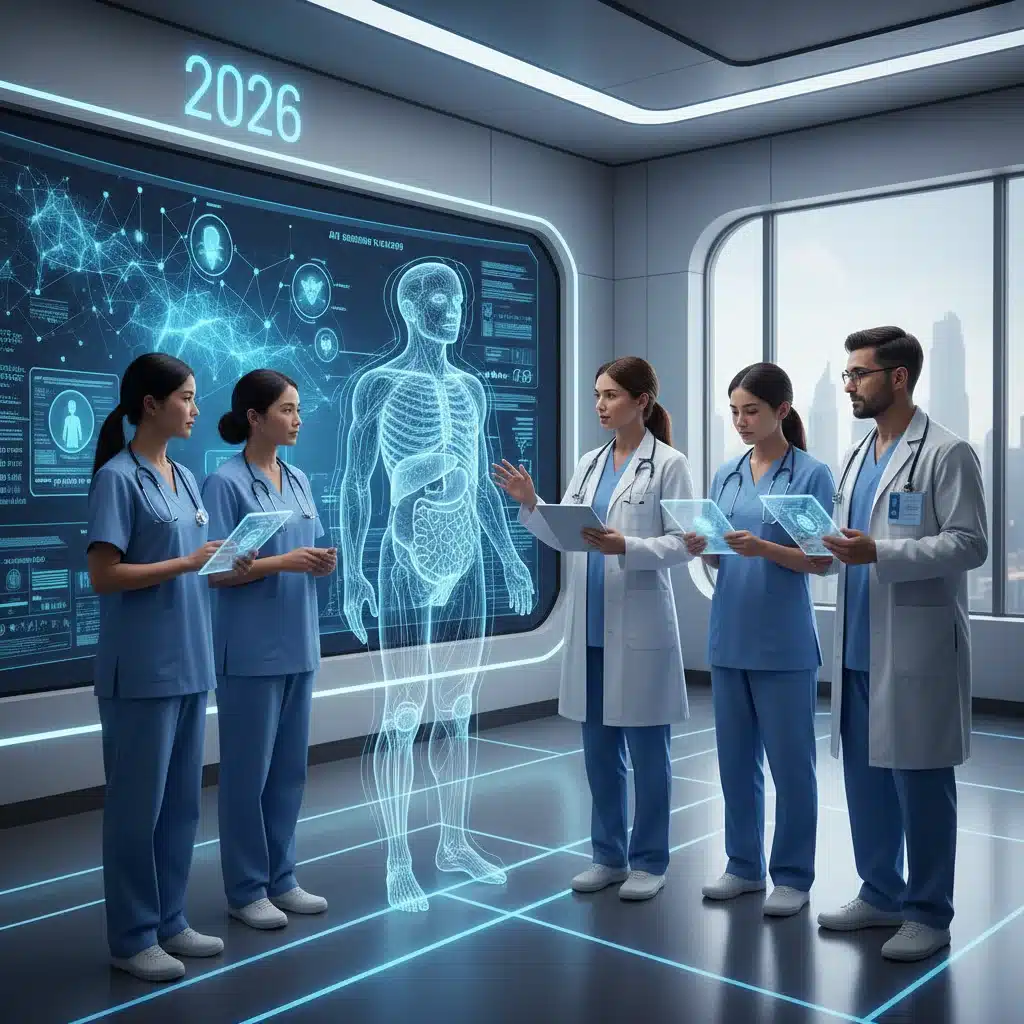
The landscape of healthcare is undergoing a profound transformation, largely driven by the rapid advancements in Artificial Intelligence (AI). What once seemed like science fiction is now becoming an integral part of clinical practice, administrative efficiency, and patient care. As we look towards 2026, the integration of AI in healthcare will not merely be an option but a fundamental necessity. This paradigm shift necessitates a robust and comprehensive educational framework for US medical staff, ensuring they are not just aware of AI, but proficient in its ethical and effective application. The goal is to empower healthcare professionals to leverage AI as a powerful tool, enhancing diagnostic accuracy, personalizing treatment plans, streamlining workflows, and ultimately, improving patient outcomes. This article delves into the critical components of such a framework, emphasizing the importance of a proactive approach to AI healthcare education.
The pace of technological change often outstrips the ability of educational institutions and professional bodies to adapt. In the realm of AI in healthcare, this gap poses significant challenges. Medical professionals, from seasoned physicians to aspiring students, must be equipped with the knowledge and skills to understand, interpret, and ethically apply AI technologies. Without a standardized and accessible educational pathway, there is a risk of a fragmented approach, leading to disparities in care quality and potential misuse of powerful tools. Our focus here is to outline a forward-thinking strategy for AI healthcare education that addresses these challenges head-on, preparing the US medical workforce for the realities of 2026 and beyond.
The Imperative for AI Healthcare Education by 2026
Why is 2026 a crucial benchmark for AI healthcare education? The answer lies in the accelerating adoption curve of AI technologies within the medical field. By this time, AI is projected to be deeply embedded in various facets of healthcare, from predictive analytics for disease outbreaks to AI-assisted robotic surgery. Ignoring this trend would be akin to ignoring the advent of electronic health records decades ago. The medical community must move beyond basic awareness to a deep understanding of AI’s capabilities and limitations. This requires a structured approach to learning that goes beyond ad-hoc training sessions.
The benefits of effective AI integration are manifold. For clinicians, AI can reduce burnout by automating repetitive tasks, provide decision support for complex cases, and offer personalized insights based on vast datasets. For patients, it can lead to earlier diagnoses, more precise treatments, and more efficient healthcare delivery. However, these benefits are only realized if the medical staff is adequately prepared. An effective AI healthcare education framework is not just about teaching technical skills; it’s about fostering a new mindset that embraces innovation while upholding the core principles of medical ethics and patient-centered care. Investing in comprehensive AI healthcare education programs now will yield significant dividends in patient safety, operational efficiency, and the overall quality of care in the coming years.
Core Pillars of an Effective AI Healthcare Education Framework
Developing a robust educational framework for AI in healthcare requires a multi-faceted approach, addressing various levels of expertise and areas of application. We can identify several core pillars that must be integrated into any successful program for US medical staff:
1. Foundational AI Literacy for All Medical Staff
Before diving into specialized applications, all medical staff—from physicians and nurses to administrators and support personnel—need a foundational understanding of what AI is, how it works, and its basic applications in healthcare. This pillar focuses on demystifying AI and building a common language.
- Basic Concepts: Introduction to machine learning, deep learning, natural language processing (NLP), and computer vision. Explaining algorithms in an understandable, non-technical manner.
- AI’s Role in Healthcare: Overview of current and emerging AI applications, such as diagnostic imaging analysis, predictive analytics for patient deterioration, drug discovery, and administrative automation.
- Data Fundamentals: Understanding the importance of data quality, data sources in healthcare (EHRs, wearables, genomics), and basic data interpretation.
- Ethical Considerations: Initial exposure to ethical dilemmas, bias in algorithms, and the importance of transparency and accountability in AI systems.
2. Clinical AI Application and Interpretation
This pillar is specifically tailored for clinicians who will be directly interacting with AI tools in diagnostic and treatment settings. The emphasis is on practical application and critical evaluation.
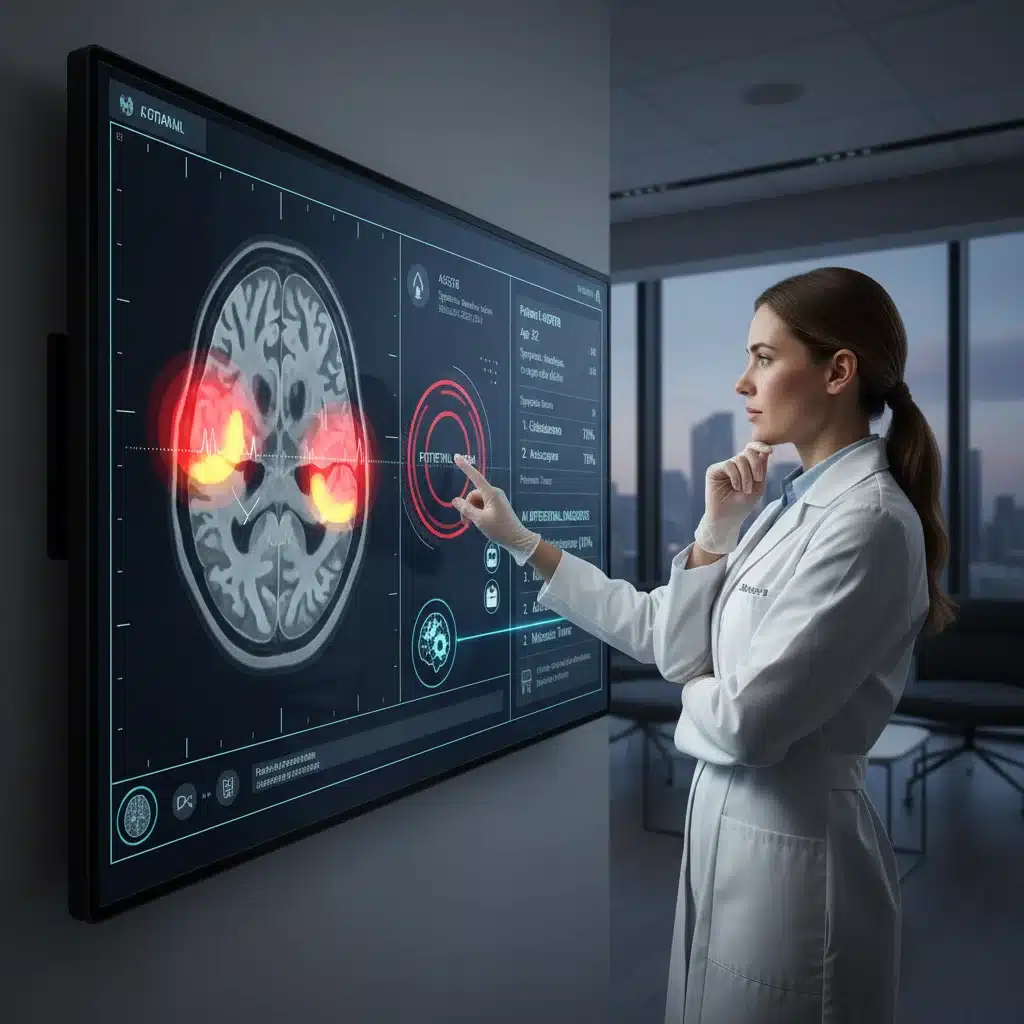
- AI-Assisted Diagnostics: Training on interpreting AI outputs for radiology, pathology, dermatology, and other specialties. Understanding the strengths and limitations of AI in image analysis and pattern recognition.
- Predictive Analytics in Patient Management: Learning to utilize AI models for predicting disease progression, readmission risks, and treatment responses. Understanding how to integrate these predictions into clinical decision-making.
- Personalized Medicine with AI: Exploring how AI analyzes genetic data, lifestyle factors, and patient history to tailor treatment plans and drug dosages.
- Human-AI Collaboration: Developing skills in effective collaboration with AI systems, understanding when to trust AI recommendations, and when to apply human judgment and expertise.
3. Ethical, Legal, and Societal Implications of AI in Healthcare
As AI becomes more pervasive, the ethical, legal, and societal dimensions become paramount. This pillar is crucial for all medical staff, especially those in leadership and policy-making roles.
- Bias and Fairness: In-depth exploration of algorithmic bias, its sources (data, design), and strategies for mitigation to ensure equitable care.
- Privacy and Data Security: Understanding HIPAA regulations in the context of AI, data anonymization techniques, and the secure handling of sensitive patient information.
- Accountability and Liability: Addressing questions of responsibility when AI systems make errors. Who is accountable: the developer, the clinician, the institution?
- Patient Consent and Autonomy: Educating patients about AI use, obtaining informed consent, and respecting patient preferences regarding AI involvement in their care.
- Transparency and Explainability (XAI): Understanding the need for ‘explainable AI’ (XAI) and how to communicate complex AI decisions to patients and other healthcare providers in a clear and understandable manner.
4. Data Science and AI for Healthcare Leadership and Researchers
For those in leadership positions, researchers, and advanced practitioners, a deeper dive into the technical aspects and strategic implications of AI is necessary. This pillar equips them to drive innovation and policy.
- AI Model Development and Validation: Basic understanding of how AI models are built, trained, and validated, including concepts like overfitting, generalization, and performance metrics.
- Regulatory Landscape: Navigating FDA regulations for AI-powered medical devices and software, and understanding evolving policy frameworks.
- Strategic Implementation: Planning and executing AI initiatives within healthcare organizations, including infrastructure requirements, change management, and resource allocation.
- Research and Innovation: Encouraging and facilitating research into novel AI applications, evaluating their efficacy, and translating findings into clinical practice.
Implementation Strategies for AI Healthcare Education
Merely outlining the pillars is not enough; effective implementation is key. Here are several strategies to ensure the successful integration of AI healthcare education across the US medical system by 2026:
1. Integrating AI into Medical School Curricula
The most effective long-term strategy is to embed AI education directly into undergraduate and graduate medical education. This ensures that future generations of medical professionals are ‘AI-native.’
- Early Exposure: Introducing AI concepts from the first year of medical school.
- Case-Based Learning: Using real-world clinical scenarios where AI plays a role to teach both technical application and ethical reasoning.
- Interdisciplinary Courses: Collaborating with computer science and engineering departments to offer joint courses and projects.
2. Continuing Medical Education (CME) and Professional Development
For current practitioners, robust CME programs are essential. These programs must be flexible, accessible, and tailored to different specialties and experience levels.
- Online Modules and Webinars: Providing self-paced learning opportunities that fit into busy schedules.
- Hands-on Workshops: Practical sessions where clinicians can interact with AI tools and platforms.
- Specialty-Specific Training: Developing modules that address AI applications relevant to specific medical fields (e.g., AI in cardiology, AI in oncology).
3. Simulation and Experiential Learning
Learning by doing is crucial for mastering complex technologies. Simulation environments can provide a safe space for medical staff to practice using AI tools.
- Virtual Patient Scenarios: Using AI-powered virtual patients to simulate diagnostic and treatment pathways.
- AI-Assisted Surgical Simulators: Training surgeons on robotic systems integrated with AI for enhanced precision.
- Data Interpretation Labs: Practical exercises in analyzing AI-generated data, identifying anomalies, and making clinical decisions.

4. Collaboration and Partnerships
No single entity can tackle this challenge alone. Collaboration between academic institutions, healthcare providers, technology companies, and regulatory bodies is vital.
- University-Hospital Partnerships: Creating joint research and training programs.
- Industry Collaboration: Working with AI developers to create educational tools and platforms that reflect the latest technologies.
- Professional Organizations: Leveraging the reach and influence of medical associations to disseminate best practices and educational resources.
Addressing Challenges in AI Healthcare Education
While the benefits are clear, implementing a comprehensive AI healthcare education framework by 2026 will not be without its challenges. Proactive strategies are needed to overcome these hurdles.
1. Faculty Training and Expertise
One of the primary challenges is ensuring that educators themselves are proficient in AI. Many current medical faculty may not have formal training in AI. A ‘train the trainer’ approach will be essential, alongside recruiting faculty with dual expertise in medicine and AI.
2. Rapidly Evolving Technology
AI is a fast-moving field. Educational content must be regularly updated to reflect new advancements, algorithms, and applications. This requires flexible curricula and continuous curriculum development cycles.
3. Resource Allocation
Implementing new educational programs requires significant investment in time, money, and infrastructure. Healthcare institutions and educational bodies must prioritize and allocate sufficient resources for AI education.
4. Overcoming Resistance to Change
Some medical professionals may be resistant to adopting new technologies, often due to concerns about job displacement, lack of understanding, or skepticism about AI’s reliability. Education must address these concerns, emphasizing AI as an augmentative tool rather than a replacement.
5. Standardizing Competencies
As AI integration grows, there will be a need to define standardized competencies for medical staff regarding AI. What should a physician know about AI? What about a nurse or a radiologist? Professional bodies will play a crucial role in establishing these benchmarks.
The Future of AI Healthcare Education Beyond 2026
While 2026 serves as a critical near-term target, the journey of AI healthcare education is ongoing. Beyond this benchmark, the framework must evolve to address more sophisticated challenges and opportunities.
1. Advanced AI Specializations
As AI becomes more specialized, so too will the educational pathways. We can anticipate the emergence of sub-specialties within medicine that focus heavily on AI-driven diagnostics, therapeutics, and research. This might include ‘AI-Radiologists’ or ‘AI-Oncologists’ who possess deep expertise in both their medical field and advanced AI methodologies.
2. Lifelong Learning Ecosystems
The dynamic nature of AI demands a commitment to lifelong learning. Educational institutions and professional organizations will need to develop robust ecosystems that support continuous professional development in AI, offering micro-credentials, certifications, and advanced degrees. This ensures that medical staff remain at the forefront of technological advancements throughout their careers.
3. Global Collaboration and Harmonization
AI in healthcare is a global phenomenon. Moving beyond 2026, there will be an increasing need for international collaboration in developing educational standards, sharing best practices, and harmonizing regulatory approaches. This will facilitate the global exchange of knowledge and expertise, ultimately benefiting patient care worldwide.
4. Patient and Public Education
An often-overlooked aspect is the education of patients and the general public about AI in healthcare. As AI becomes more common, patients will need to understand what it is, how it affects their care, and their rights regarding AI-driven interventions. Educational frameworks should ideally extend to public health campaigns and patient advocacy resources, fostering trust and informed decision-making.
5. Focus on Human-Centric AI
The ultimate goal of AI in healthcare is to augment human capabilities, not replace them. Future AI healthcare education will increasingly emphasize human-centric AI design and application, ensuring that technology serves humanity and enhances the compassionate aspects of care. This includes training in communication skills to explain AI findings to patients, and understanding the psychological impacts of AI on both patients and providers.
Conclusion: Preparing for an AI-Powered Healthcare Future
The integration of AI into US healthcare by 2026 is not a distant possibility but an imminent reality. To harness its full potential and mitigate its risks, a comprehensive, proactive, and continuously evolving educational framework for medical staff is indispensable. This framework must encompass foundational literacy, clinical application, ethical considerations, and advanced leadership training. By investing in robust AI healthcare education now, we can ensure that the US medical workforce is well-prepared to navigate the complexities and leverage the opportunities presented by this transformative technology. The future of healthcare is intelligent, and an educated workforce is the cornerstone of that intelligence, ensuring that innovation translates into better, safer, and more equitable patient care for all.
The journey to an AI-powered healthcare system is a collaborative one, requiring concerted efforts from educators, policymakers, technology developers, and healthcare providers. By working together, we can build a future where AI serves as a powerful ally in the pursuit of health and well-being, guided by the expertise and ethical compass of a well-trained medical staff. The time to act is now, to define and implement the AI healthcare education roadmap that will shape the next generation of medical practice.
Author