MedTech Data Privacy Education: 6-Month US Compliance Plan 2025

Anúncios
Achieving robust MedTech data privacy compliance in the US by 2025 requires a strategic, proactive 6-month education plan, integrating practical solutions and continuous learning to navigate evolving regulatory landscapes effectively.
Anúncios
Anúncios
Preparing for the rapidly evolving landscape of healthcare technology demands a sophisticated approach to data security. MedTech data privacy education is not merely a formality; it is a critical investment for US medical technology companies aiming for compliance in 2025 and beyond.
Understanding the MedTech Regulatory Landscape
The US MedTech sector operates under a complex web of regulations designed to protect sensitive patient data. Navigating these mandates requires a deep understanding of their nuances and implications for technology development and deployment.
Compliance is a continuous journey, not a one-time event. Companies must stay abreast of changes to avoid significant penalties, reputational damage, and loss of patient trust. This foundational understanding underpins any effective education strategy.
Key Regulations Impacting MedTech
Several federal and state laws directly influence how MedTech companies handle data. Familiarity with these is paramount for all employees involved in data processing, from engineers to sales personnel.
- HIPAA (Health Insurance Portability and Accountability Act): The cornerstone of US healthcare data privacy, governing the use and disclosure of protected health information (PHI).
- HITECH Act (Health Information Technology for Economic and Clinical Health Act): Strengthened HIPAA enforcement and introduced breach notification requirements.
- State-specific privacy laws: Laws like the California Consumer Privacy Act (CCPA) and its successor, the California Privacy Rights Act (CPRA), can apply to MedTech companies, especially those operating nationally or dealing with California residents.
Understanding the interplay between these regulations is crucial. For instance, while HIPAA primarily focuses on PHI, state laws often broaden the definition of personal data, requiring a more comprehensive approach to privacy education.
Beyond federal and state mandates, industry-specific guidelines and international standards (like GDPR, if operating globally) can also influence best practices. A holistic view ensures that educational efforts cover all necessary compliance angles.
In conclusion, a thorough grasp of the regulatory environment is the first step in building a robust data privacy education program. This knowledge forms the bedrock upon which all subsequent training and compliance efforts are built.
Month 1-2: Foundation and Initial Assessment
The initial phase of a 6-month MedTech data privacy education plan focuses on establishing a strong foundation and conducting a comprehensive assessment of current practices. This period is crucial for identifying gaps and tailoring subsequent training modules effectively.
Without a clear understanding of existing knowledge levels and procedural shortcomings, any educational effort risks being misdirected or inefficient. This stage sets the strategic direction for the entire program.
Current State Analysis and Gap Identification
Begin by evaluating the organization’s current data privacy posture. This involves reviewing existing policies, procedures, and employee understanding of privacy principles.
- Policy Review: Examine all data privacy policies, ensuring they are up-to-date with 2025 regulations and clearly communicated.
- Risk Assessment: Identify potential vulnerabilities in data processing, storage, and transmission workflows.
- Employee Knowledge Survey: Administer anonymous surveys or conduct interviews to gauge employees’ current understanding of data privacy responsibilities and relevant regulations.
This assessment should pinpoint specific areas where employees lack knowledge or where current practices fall short of compliance requirements. It’s about finding the critical points of intervention.
Following the assessment, a detailed report summarizing findings and recommending areas for improvement should be generated. This report acts as a roadmap for the curriculum development in the subsequent months.
The goal of these first two months is to create a baseline. By understanding where the company stands today, MedTech organizations can strategically plan their educational journey to reach full compliance by 2025. This foundational work ensures that the subsequent training is relevant, impactful, and addresses the most pressing needs.
Month 3-4: Curriculum Development and Pilot Training
With a comprehensive assessment complete, months three and four are dedicated to developing a targeted education curriculum and piloting the training program. This phase translates identified gaps into actionable learning modules.
Effective curriculum development ensures that the training is not only comprehensive but also engaging and relevant to diverse roles within the MedTech organization.
Designing Engaging Training Modules
The curriculum should be structured to address the specific needs identified during the assessment phase. It’s vital to move beyond generic privacy training and focus on MedTech-specific scenarios.
- Role-Based Training: Develop modules tailored to different departments (e.g., R&D, IT, Sales, Customer Support) highlighting their unique data privacy responsibilities.
- Interactive Content: Incorporate case studies, quizzes, simulations, and real-world examples relevant to MedTech operations to enhance engagement and retention.
- Clear Learning Objectives: Each module should have defined learning outcomes, ensuring participants understand what they are expected to know and do.
Consider using a blended learning approach, combining online modules with in-person workshops, to cater to various learning styles and schedules. This flexibility can significantly improve participation rates and learning effectiveness.
Once the initial curriculum is developed, a pilot program should be run with a small group of employees. This allows for feedback collection and refinement before a broader rollout.
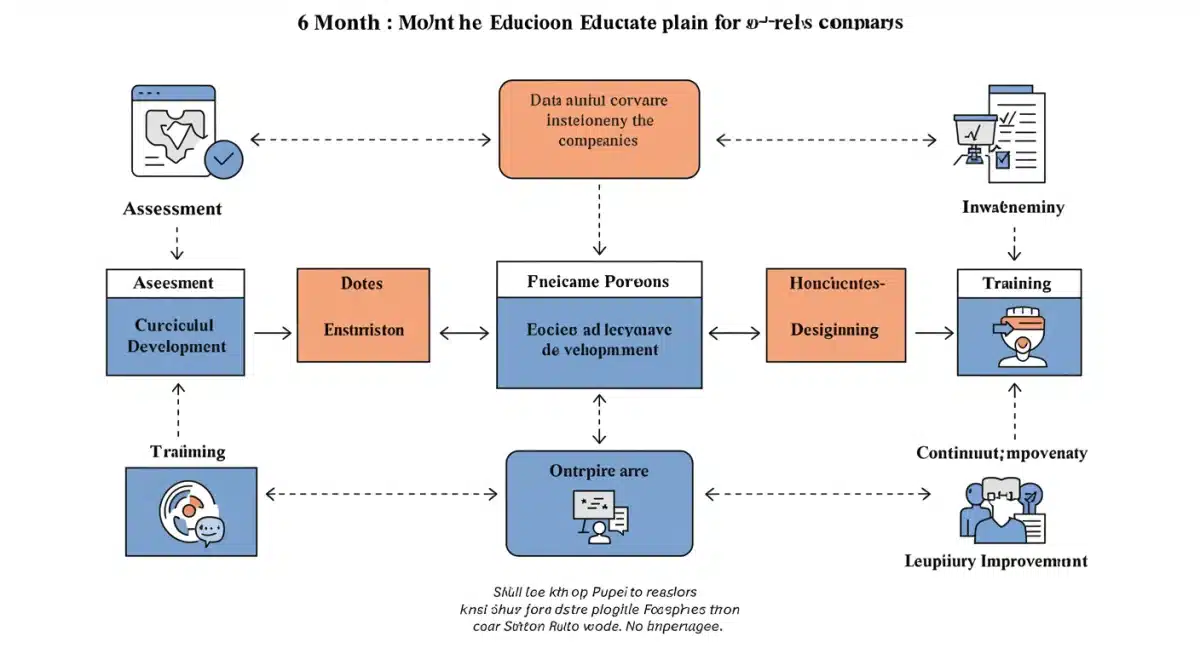
The pilot phase is an invaluable opportunity to identify any ambiguities, technical glitches, or areas where the content could be made more impactful. Feedback from pilot participants helps fine-tune the materials, ensuring maximum effectiveness for the wider rollout.
By the end of this phase, MedTech companies should have a robust, tested curriculum ready for full implementation, addressing the core requirements of MedTech data privacy education needed for 2025 compliance.
Month 5: Full-Scale Implementation and Communication
Month five marks the critical phase of rolling out the comprehensive data privacy education program across the entire organization. Successful implementation hinges on clear communication and accessible resources.
This period requires careful coordination to ensure all employees receive the necessary training without significant disruption to their daily responsibilities, while emphasizing the importance of their participation.
Executing the Training Program
A well-planned rollout strategy is essential. This includes scheduling, platform selection, and establishing clear communication channels.
- Phased Rollout: Implement the training in stages, perhaps department by department, to manage logistics and address any issues promptly.
- Accessible Platforms: Utilize learning management systems (LMS) that are user-friendly and accessible from various devices, ensuring ease of participation.
- Dedicated Support: Provide a point of contact for employees to ask questions or seek clarification during the training period.
Beyond the technical aspects of training delivery, effective communication about the program’s importance is paramount. Leadership buy-in and active participation can significantly boost employee engagement.
Regular reminders and internal campaigns highlighting the benefits of robust data privacy practices can foster a culture of compliance. This proactive communication helps employees understand not just the ‘what’ but also the ‘why’ behind the training.
The goal of month five is to ensure that every employee, regardless of their role, completes the mandated data privacy education. This broad engagement is key to building a collective understanding and responsibility towards data protection.
Month 6: Evaluation, Reinforcement, and Future Planning
The final month of the 6-month plan focuses on evaluating the program’s effectiveness, reinforcing key learnings, and planning for ongoing data privacy education. Compliance is an ongoing process, not a destination.
This stage ensures that the initial effort translates into sustained adherence to data privacy principles and continuous improvement.
Measuring Effectiveness and Sustaining Compliance
Evaluate the training program’s impact through various metrics. This helps to determine if the educational goals were met and where further improvements are needed.
- Post-Training Assessments: Conduct quizzes or tests to measure knowledge retention and understanding of key privacy concepts.
- Behavioral Changes: Observe and assess changes in employee behavior related to data handling and security protocols.
- Feedback Mechanisms: Gather qualitative feedback through surveys or focus groups to understand employees’ perceptions of the training.
Beyond immediate evaluation, it’s crucial to establish mechanisms for continuous reinforcement. Regular updates, refresher courses, and internal newsletters can keep data privacy at the forefront of employees’ minds.
Planning for future training needs is also vital. As regulations evolve and new technologies emerge, the data privacy curriculum must adapt. This includes scheduling annual mandatory training and specialized modules for new hires or advanced topics.
By the end of month six, the MedTech company should not only be compliant with 2025 regulations but also possess a robust framework for ongoing MedTech data privacy education, ensuring long-term data protection and trust.
Practical Solutions for MedTech Data Privacy
Beyond theoretical knowledge, implementing practical solutions is essential for embedding data privacy into the daily operations of a MedTech company. Education must be paired with actionable strategies and tools.
These practical steps transform privacy principles from abstract concepts into tangible routines, reinforcing the lessons learned during training.
Integrating Privacy-by-Design Principles
One of the most effective practical solutions is to adopt a privacy-by-design approach in all aspects of MedTech development and operations. This means considering privacy from the very outset of any project.
- Early Privacy Impact Assessments: Conduct PIAs at the design phase of new products or features to identify and mitigate privacy risks proactively.
- Data Minimization: Implement practices to collect, process, and store only the data absolutely necessary for its intended purpose.
- Security Controls: Embed robust technical and organizational security measures to protect data throughout its lifecycle, from encryption to access controls.
By making privacy an integral part of the development cycle, MedTech companies can prevent many compliance issues before they even arise. This proactive stance is far more effective than reactive measures.
Another crucial practical solution involves regular audits and monitoring. These activities provide ongoing assurance that privacy controls are functioning as intended and identify any deviations that require corrective action.
Furthermore, fostering a culture of privacy where every employee feels responsible for data protection reinforces educational efforts. This is achieved through consistent reinforcement, clear communication, and leading by example from senior management.
Ultimately, combining comprehensive MedTech data privacy education with these practical solutions creates a resilient framework for compliance, safeguarding sensitive health information and maintaining public trust in an increasingly digital healthcare landscape.
| Key Phase | Brief Description |
|---|---|
| Months 1-2: Foundation | Initial assessment of current privacy posture, regulatory understanding, and gap identification. |
| Months 3-4: Development | Curriculum design, role-based modules, interactive content, and pilot training. |
| Month 5: Implementation | Full-scale rollout of the training program, communication, and support. |
| Month 6: Evaluation | Program effectiveness measurement, reinforcement, and planning for ongoing education. |
Frequently asked questions about MedTech data privacy education
A 6-month plan allows for a structured, comprehensive approach to MedTech data privacy education. It provides ample time for thorough assessment, tailored curriculum development, effective implementation across diverse teams, and crucial evaluation, ensuring deep understanding and sustained compliance with evolving US regulations by 2025.
MedTech companies primarily need to understand HIPAA and HITECH, which govern protected health information. Additionally, state-specific privacy laws like CCPA/CPRA are increasingly relevant, especially for companies operating nationwide. A comprehensive education plan integrates these federal and state requirements for robust compliance.
Engaging training involves role-based modules, interactive content like case studies and simulations, and clear learning objectives. Blended learning approaches, combining online and in-person sessions, can also cater to diverse learning styles, making the education more relevant and impactful for MedTech professionals.
A pilot training program is crucial for testing the curriculum with a small group before full rollout. It helps identify ambiguities, technical issues, and areas for improvement, ensuring the training is effective, relevant, and well-received by the wider organization, ultimately optimizing the overall educational impact.
Continuous compliance requires ongoing efforts such as regular refresher courses, updates on new regulations, and internal communication campaigns. Implementing privacy-by-design principles, conducting regular audits, and fostering a company-wide culture of data protection are also vital for sustaining adherence and adapting to future challenges.
Conclusion
Successfully navigating the intricate world of data privacy in the US MedTech sector by 2025 demands more than just awareness; it requires a meticulously planned and executed education strategy. The 6-month plan outlined provides a practical roadmap, moving from foundational assessment to full-scale implementation and continuous reinforcement. By investing in comprehensive MedTech data privacy education, companies can not only achieve compliance but also cultivate a robust culture of data protection, safeguarding sensitive information and building enduring trust with patients and stakeholders.
Author