Optimizing Working Capital: MedTech Strategies for 10% Cash Flow Improvement by 2026

Anúncios
Optimizing Working Capital: Practical Solutions for MedTech Companies to Improve Cash Flow by 10% in 2026
The MedTech industry stands at a pivotal juncture, characterized by rapid innovation, stringent regulatory landscapes, and intense market competition. While these factors drive progress in healthcare, they also present significant challenges to financial stability, particularly concerning working capital management. For MedTech companies, efficient management of current assets and liabilities is not just about survival; it’s about thriving, investing in R&D, and expanding market reach. This article delves into practical, actionable strategies designed to help MedTech companies achieve a remarkable 10% improvement in cash flow by 2026 through targeted MedTech Working Capital optimization.
Working capital is the lifeblood of any business, representing the liquidity available to meet short-term obligations. In the MedTech sector, where product lifecycles can be long, inventory can be high-value, and payment cycles can be extended, effective working capital management is paramount. A 10% improvement in cash flow isn’t an arbitrary target; it’s a strategic imperative that can unlock significant opportunities for growth, resilience, and competitive advantage. Achieving this requires a holistic approach, focusing on three core components: inventory management, accounts receivable optimization, and accounts payable strategies.
Anúncios
Anúncios
Understanding the MedTech Working Capital Landscape
Before diving into solutions, it’s crucial to understand the unique challenges MedTech companies face in managing their working capital. Unlike other industries, MedTech deals with highly specialized, often expensive, and sometimes perishable inventory. Regulatory hurdles mean longer product development cycles and strict quality control, impacting manufacturing lead times and inventory holding costs. Furthermore, sales cycles can be protracted, involving complex procurement processes with hospitals and healthcare providers, leading to extended accounts receivable periods.
These factors contribute to a higher demand for working capital, making its efficient management a critical determinant of financial health. A company with poor working capital management might struggle with liquidity, miss out on growth opportunities, or even face insolvency, despite having innovative products and strong market potential. Conversely, companies excelling in MedTech Working Capital optimization can free up significant capital, which can then be reinvested into research and development, market expansion, or strategic acquisitions, ultimately driving sustainable growth.
Strategic Pillars for 10% Cash Flow Improvement
Achieving a 10% cash flow improvement by 2026 requires a multi-pronged strategy. This section will explore the key pillars of working capital optimization, offering practical solutions for each.
1. Inventory Management: The Heart of MedTech Working Capital
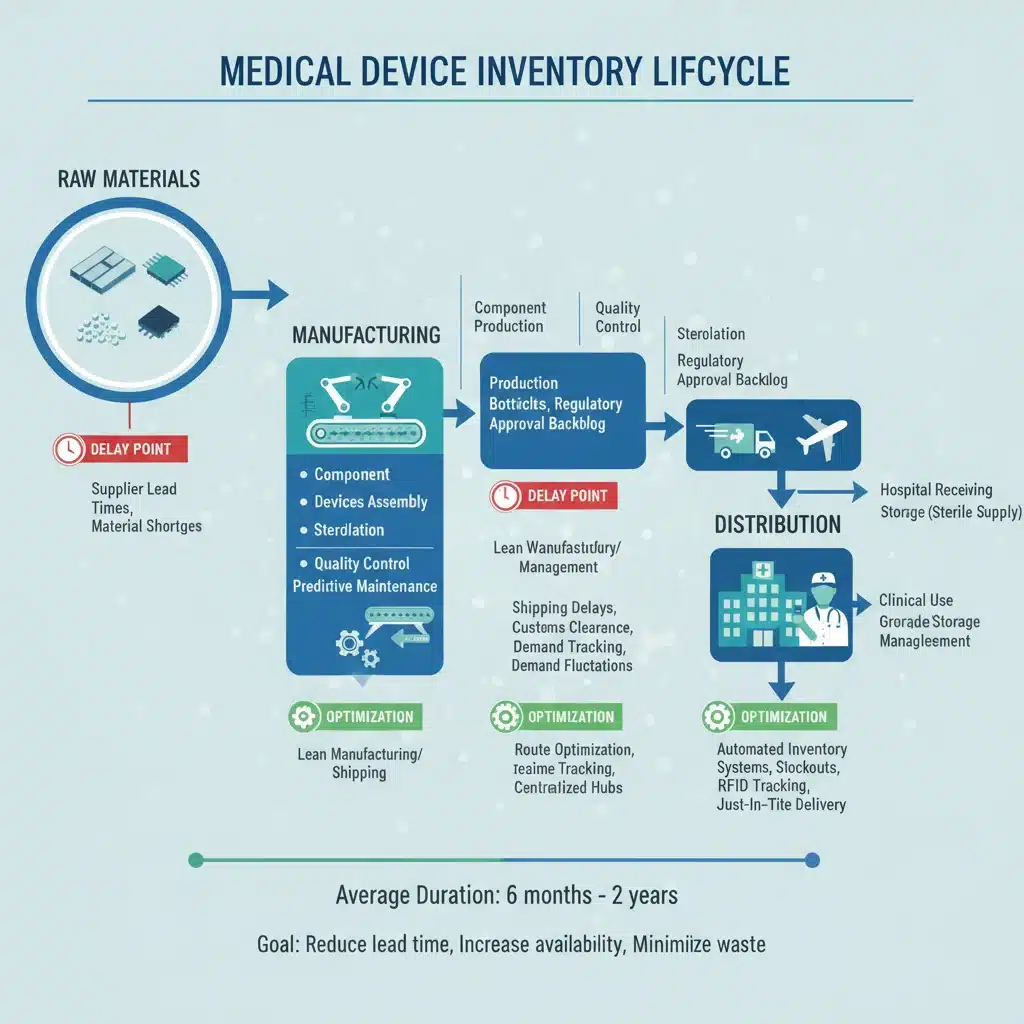
Inventory often represents the largest component of current assets for MedTech companies. High inventory levels tie up capital, incur storage costs, risk obsolescence, and can lead to write-offs. Conversely, insufficient inventory can lead to missed sales opportunities and production delays. The goal is to strike an optimal balance, ensuring product availability while minimizing carrying costs.
Actionable Strategies for Inventory Optimization:
- Demand Forecasting Accuracy: Leverage advanced analytics and machine learning to improve the accuracy of demand forecasts. By analyzing historical sales data, market trends, seasonal variations, and even external factors like public health crises, MedTech companies can predict future demand with greater precision. This reduces the need for buffer stock and minimizes the risk of overstocking or understocking. Implement predictive analytics tools that can ingest vast datasets, including clinical trial outcomes and regulatory approval timelines, to refine demand projections for new and existing products.
- Just-In-Time (JIT) Inventory & Lean Principles: Explore the feasibility of JIT inventory systems where components and finished goods are received just as they are needed for production or sale. While challenging in a highly regulated industry, applying lean manufacturing principles can significantly reduce waste, shorten lead times, and lower inventory holding costs. This involves optimizing production flows, reducing setup times, and fostering a culture of continuous improvement. For instance, establishing closer relationships with suppliers to ensure timely delivery of critical components can facilitate a more lean approach.
- Vendor-Managed Inventory (VMI): Collaborate with key suppliers to implement VMI programs. Under VMI, suppliers take responsibility for managing inventory levels at the manufacturer’s or distributor’s location. This can reduce administrative burden, improve inventory visibility, and optimize stock levels, as suppliers are incentivized to manage their own inventory efficiently. This requires robust data sharing and trust between partners.
- Consignment Inventory: For high-value, slow-moving items, especially those used in surgical settings, consider implementing consignment inventory models with hospitals or distributors. The MedTech company retains ownership of the inventory until it is actually used or sold, reducing the customer’s upfront capital outlay and improving sales velocity. This shifts inventory risk and carrying costs away from the MedTech company until a sale is confirmed.
- Product Lifecycle Management (PLM) Integration: Integrate inventory management with PLM systems. As products move through their lifecycle (introduction, growth, maturity, decline), demand patterns change. Effective PLM integration allows for proactive inventory adjustments, preventing the accumulation of obsolete stock as products near end-of-life and ensuring adequate stock for new product launches.
- Warehouse and Logistics Optimization: Streamline warehousing operations through optimized layouts, automated picking systems, and efficient transportation networks. Centralizing distribution centers or strategically placing regional hubs can reduce shipping costs and lead times. Implementing inventory tracking technologies like RFID can improve accuracy and reduce shrinkage.
2. Accounts Receivable Optimization: Accelerating Cash Inflows
Accounts receivable (AR) represents money owed to the company by customers. In the MedTech sector, AR cycles can be notoriously long due to complex billing procedures, insurance claims, and hospital payment terms. Reducing the Days Sales Outstanding (DSO) is a critical objective for improving cash flow.
Actionable Strategies for Accounts Receivable Optimization:
- Robust Credit Policies and Vetting: Establish clear, consistent credit policies and rigorously vet new customers. While MedTech companies often deal with established institutions, understanding their financial health and payment history can prevent future collection issues. Implement a tiered credit approval process based on customer risk profiles.
- Expedited Invoicing and Electronic Billing: Ensure invoices are generated accurately and promptly. Transition to electronic invoicing systems to reduce delays associated with paper processing and mail delivery. Electronic systems can also provide real-time tracking of invoice delivery and receipt.
- Proactive Collections: Implement a proactive and systematic collections process. This includes sending automated reminders before due dates, following up promptly on overdue invoices, and establishing clear escalation procedures for non-payment. Utilize dedicated AR teams or specialized software to manage collections efficiently.
- Early Payment Discounts: Offer small, strategically calculated discounts for early payment. While this reduces the total revenue per sale, the accelerated cash inflow can significantly improve liquidity and reduce the overall cost of capital. Analyze the trade-off between the discount offered and the benefit of faster cash receipt.
- Factoring and Supply Chain Finance: Explore options like factoring or supply chain finance for immediate cash injection. Factoring involves selling AR to a third party at a discount. Supply chain finance programs can facilitate early payment to suppliers while extending payment terms for the MedTech company, optimizing both AR and AP.
- Dispute Resolution Process: Establish a clear and efficient process for resolving billing disputes. Delays in dispute resolution can significantly prolong AR cycles. Empower customer service and sales teams with the information and authority to address common issues quickly.
- Contract Management Review: Regularly review and negotiate payment terms with customers. Standardize contract language to avoid ambiguities that can lead to payment delays. For larger contracts, consider milestone-based payments to ensure a steady flow of cash.
3. Accounts Payable Strategies: Managing Outflows Effectively
Accounts payable (AP) represents the money a company owes to its suppliers. While delaying payments might seem like an easy way to improve cash flow, it can damage supplier relationships and potentially lead to supply chain disruptions. The goal is to optimize payment terms to leverage cash effectively without jeopardizing critical supplier relationships.
Actionable Strategies for Accounts Payable Optimization:
- Negotiate Favorable Payment Terms: Actively negotiate extended payment terms with suppliers where possible, without incurring penalties or damaging relationships. Aim for terms that align with your cash conversion cycle. For example, if your AR cycle is 60 days, aim for AP terms of 60 days or more.
- Dynamic Discounting: Implement dynamic discounting programs where you can take advantage of early payment discounts offered by suppliers, often through a third-party platform. This allows you to pay suppliers early in exchange for a discount, optimizing your cash position when you have surplus funds.
- Centralized Procurement and Spend Analysis: Centralize procurement functions to gain better visibility into spending patterns and consolidate purchasing power. Conduct regular spend analysis to identify opportunities for cost reduction, negotiate better terms with key suppliers, and reduce rogue spending.
- Automate AP Processes: Automate invoice processing, approval workflows, and payment execution. This reduces manual errors, speeds up processing times, and ensures payments are made accurately and on time, avoiding late payment penalties and improving supplier relations. Robotic Process Automation (RPA) can be particularly effective here.
- Payment Timing Optimization: Pay invoices on the last possible day within the agreed terms to maximize the use of your cash. However, be mindful of early payment discounts that might offer a higher return than holding onto cash.
- Supplier Relationship Management: Foster strong relationships with key suppliers. Open communication and mutual trust can lead to more flexible payment terms, better pricing, and improved service, all of which indirectly contribute to better MedTech Working Capital management.
Leveraging Technology for MedTech Working Capital Excellence
Technology plays a crucial role in achieving sophisticated working capital optimization. Modern ERP systems, advanced analytics platforms, and specialized financial software can provide the insights and automation necessary to implement these strategies effectively.
Key Technological Enablers:
- Enterprise Resource Planning (ERP) Systems: A robust ERP system integrates all core business processes, from inventory and production to sales, finance, and human resources. This provides a single source of truth for data, enabling better decision-making and streamlining workflows critical for working capital management.
- Advanced Analytics and AI: Utilize AI and machine learning for predictive analytics in demand forecasting, credit risk assessment, and cash flow forecasting. These tools can identify patterns and anomalies that human analysis might miss, leading to more accurate predictions and proactive interventions.
- Automation Platforms: Implement automation for repetitive tasks in AR (e.g., invoice generation, reminder emails) and AP (e.g., invoice data entry, payment processing). This frees up human resources for more strategic tasks and reduces the likelihood of errors.
- Cloud-Based Solutions: Cloud platforms offer scalability, flexibility, and real-time data access, which is crucial for dynamic working capital management. They also reduce the need for significant upfront IT infrastructure investments.
- Blockchain for Supply Chain Transparency: While still emerging, blockchain technology offers the potential for unprecedented transparency and security in supply chain transactions, which can further optimize inventory management and payment processes by providing immutable records and smart contracts.

Measuring and Monitoring Progress Towards 10% Cash Flow Improvement
Achieving a 10% cash flow improvement is not a one-time event but an ongoing process that requires continuous measurement, monitoring, and adjustment. Key performance indicators (KPIs) are essential for tracking progress and identifying areas for further optimization.
Essential KPIs for MedTech Working Capital:
- Cash Conversion Cycle (CCC): This is the most comprehensive working capital metric, measuring the number of days it takes for a company to convert its investments in inventory and accounts receivable into cash. A shorter CCC indicates better working capital management.
- Days Inventory Outstanding (DIO): Measures the average number of days a company holds inventory before selling it. A lower DIO indicates efficient inventory management.
- Days Sales Outstanding (DSO): Measures the average number of days it takes to collect payment after a sale. A lower DSO signifies efficient accounts receivable management.
- Days Payables Outstanding (DPO): Measures the average number of days a company takes to pay its suppliers. A higher DPO, without damaging supplier relationships, can indicate effective use of cash.
- Working Capital Turnover Ratio: Measures how efficiently a company is using its working capital to generate sales. A higher ratio generally indicates better efficiency.
- Gross Profit Margin and Net Profit Margin: While not direct working capital metrics, these provide context on overall profitability, which is intrinsically linked to cash flow generation.
Regularly review these KPIs, ideally on a monthly or quarterly basis, and benchmark them against industry averages and best-in-class MedTech companies. Implement dashboards that provide real-time visibility into these metrics, enabling prompt corrective actions.
Case Study: A Hypothetical MedTech Success Story
Consider ‘Innovate Medical Devices,’ a mid-sized MedTech company struggling with extended cash conversion cycles due to high inventory holding and slow AR collections. By implementing a focused MedTech Working Capital optimization program, they achieved significant improvements:
- Inventory: Innovate Medical Devices adopted advanced demand forecasting software, reducing forecast errors by 15%. They also implemented a VMI program with their top three suppliers for high-volume components, cutting their DIO from 90 days to 75 days. This freed up $5 million in tied-up capital.
- Accounts Receivable: They streamlined their invoicing process with an automated electronic billing system and introduced a proactive collections strategy. By offering a 1.5% early payment discount for payments within 15 days, they incentivized faster payments. Their DSO improved from 70 days to 55 days, accelerating cash inflow by an average of $8 million annually.
- Accounts Payable: Innovate Medical Devices renegotiated payment terms with non-critical suppliers, extending their DPO from 45 days to 60 days without affecting supply. They also automated their AP process, reducing processing costs by 20%.
Cumulatively, these initiatives led to a 12% improvement in their overall cash flow within 18 months, surpassing their initial 10% target for 2026. This additional cash enabled them to invest in a new R&D project, accelerating their next-generation product launch and securing a stronger market position.
Conclusion: A Path to Sustainable Financial Health
Optimizing MedTech Working Capital is not merely a financial exercise; it’s a strategic imperative that underpins a company’s ability to innovate, grow, and compete in a demanding market. By meticulously addressing inventory management, accounts receivable, and accounts payable, MedTech companies can unlock substantial cash flow improvements. The target of a 10% cash flow improvement by 2026 is ambitious but entirely achievable through a disciplined approach, leveraging technology, and fostering a culture of continuous financial optimization.
The benefits extend beyond mere liquidity; improved working capital management enhances profitability, reduces financial risk, and provides the capital necessary for strategic investments that drive future success. Companies that master this aspect of financial management will be better positioned to navigate industry challenges, capitalize on emerging opportunities, and ultimately deliver greater value to patients and shareholders alike. Begin your journey towards enhanced financial agility today, and secure a more robust future for your MedTech enterprise.
Author