Mastering Digital Health Reimbursement: Boost Revenue 15% by 2026

Anúncios
Mastering Digital Health Reimbursement: Boost Revenue 15% by 2026
The landscape of healthcare is rapidly evolving, with digital health tools emerging as pivotal instruments for enhancing patient care, improving outcomes, and increasing efficiency. However, the true potential of these innovations can only be fully realized when robust and sustainable reimbursement models are in place. For providers, developers, and healthcare organizations in the United States, navigating the intricate web of reimbursement codes for digital health tools is not just a challenge—it’s an imperative for financial viability and growth. This comprehensive guide will delve into the strategies and insights necessary to optimize your digital health reimbursement processes, aiming to maximize revenue by an ambitious 15% by 2026.
Anúncios
Anúncios
The promise of digital health is undeniable. From telehealth platforms connecting patients with specialists across vast distances to remote patient monitoring (RPM) devices tracking vital signs in real-time, these technologies are reshaping how healthcare is delivered. Yet, the path to widespread adoption and financial sustainability is often paved with complexities, particularly concerning how these services are paid for. Understanding and strategically applying reimbursement codes is the cornerstone of success in this dynamic environment. Without a clear and effective reimbursement strategy, even the most innovative digital health solutions risk faltering.
Our objective is to equip you with the knowledge and actionable steps required to not only understand the current reimbursement landscape but also to proactively position your digital health offerings for future success. We will explore key coding methodologies, delve into the nuances of payer policies, and highlight best practices for documentation and compliance. By the end of this article, you will have a clearer roadmap to navigating the financial aspects of digital health, ultimately contributing to a healthier bottom line and enhanced patient access to care.
The Shifting Tides of Digital Health Reimbursement
Historically, healthcare reimbursement models have been slow to adapt to technological advancements. Traditional fee-for-service structures were designed for in-person consultations and procedures, leaving many digital health services in a gray area. However, the COVID-19 pandemic accelerated the adoption of telehealth and other digital solutions, forcing payers, including the Centers for Medicare & Medicaid Services (CMS) and private insurers, to rapidly expand coverage. This rapid expansion, while beneficial, also introduced a degree of fluidity and complexity that requires constant monitoring and adaptation.
Understanding the current state of digital health reimbursement involves recognizing several key trends:
- Expansion of Telehealth Coverage: Many of the temporary telehealth waivers implemented during the pandemic have been made permanent or extended, signaling a long-term commitment to virtual care.
- Growing Emphasis on Remote Patient Monitoring (RPM): RPM has seen significant growth in both utilization and reimbursement, particularly for chronic disease management.
- Emergence of Digital Therapeutics (DTx): These software-based interventions are gaining recognition as legitimate medical treatments, with increasing efforts to establish dedicated reimbursement pathways.
- Focus on Value-Based Care: Payers are increasingly shifting towards models that reward outcomes rather than just services, which aligns well with the data-driven nature of many digital health tools.
- State-Level Variations: While federal policies set a baseline, state-specific regulations and mandates significantly impact reimbursement for digital health services, particularly for Medicaid and commercial plans.
Navigating these shifting tides requires a proactive and informed approach. Organizations must stay abreast of regulatory changes, understand payer policies, and be prepared to advocate for their digital health solutions. The goal is not just to get paid, but to get paid adequately for the value delivered.
Decoding CPT Codes and Modifiers for Digital Health
At the heart of digital health reimbursement lies the accurate application of Current Procedural Terminology (CPT) codes. These five-digit codes, maintained by the American Medical Association (AMA), describe medical, surgical, and diagnostic services and are essential for billing. For digital health, several categories of CPT codes are particularly relevant:
Telehealth Services
Many traditional evaluation and management (E/M) codes can now be billed for telehealth services, often with specific modifiers. Key codes include:
- 99201-99215: Office or Other Outpatient Services.
- 99441-99443: Telephone Evaluation and Management Services (though less frequently used for video visits).
- G2012: Brief communication technology-based service (e.g., virtual check-in).
Modifiers are crucial for indicating that a service was delivered via telehealth. Common modifiers include:
- -95: Synchronous Telemedicine Service Rendered Via a Real-Time Interactive Audio and Video Telecommunications System.
- -GT: Via interactive audio and video telecommunication systems (often used for Medicare prior to -95).
- -POS 02: Telehealth Provided Other Than in Patient’s Home.
- -POS 10: Telehealth Provided in Patient’s Home.
Remote Patient Monitoring (RPM) Codes
RPM has a dedicated set of CPT codes that cover the setup, education, and ongoing monitoring of patients using digital devices:
- 99453: Remote monitoring of physiologic parameter(s) (e.g., weight, blood pressure, pulse oximetry, respiratory flow rate), initial set-up and patient education on use of equipment.
- 99454: Remote monitoring of physiologic parameter(s) (e.g., weight, blood pressure, pulse oximetry, respiratory flow rate), device(s) supply with daily recording(s) or programmed alert(s) transmission, each 30 days.
- 99457: Remote physiologic monitoring treatment management services, clinical staff/physician/other qualified health care professional time in a calendar month requiring interactive communication with the patient/caregiver during the month; initial 20 minutes.
- 99458: Remote physiologic monitoring treatment management services, clinical staff/physician/other qualified health care professional time in a calendar month requiring interactive communication with the patient/caregiver during the month; each additional 20 minutes (List separately in addition to code 99457).
- 99091: Collection and interpretation of physiologic data (e.g., ECG, blood pressure, glucose monitoring) digitally stored and/or transmitted by the patient and/or caregiver to the physician or other qualified health care professional, requiring a minimum of 30 minutes of time, each 30 days.
Understanding the specific requirements for each RPM code—such as the minimum number of days of data collection or the minimum time spent on interactive communication—is critical for compliant billing and maximizing digital health reimbursement.
Digital Therapeutics (DTx) and Emerging Codes
The reimbursement landscape for DTx is still evolving. Some DTx are covered under existing CPT codes if they are integral to a service already described (e.g., behavioral health codes). However, there’s a growing push for unique DTx codes. The AMA has introduced Category III CPT codes, which are temporary codes for emerging technologies, services, and procedures. These can be a stepping stone towards Category I codes and provide a mechanism for data collection to support future permanent coding. Staying updated on Category III codes relevant to your DTx is essential.
Furthermore, some payers are developing their own policies for DTx, sometimes offering coverage through pharmacy benefits or specific medical policies. Collaboration with payers and advocacy groups is vital for establishing robust reimbursement pathways for DTx.
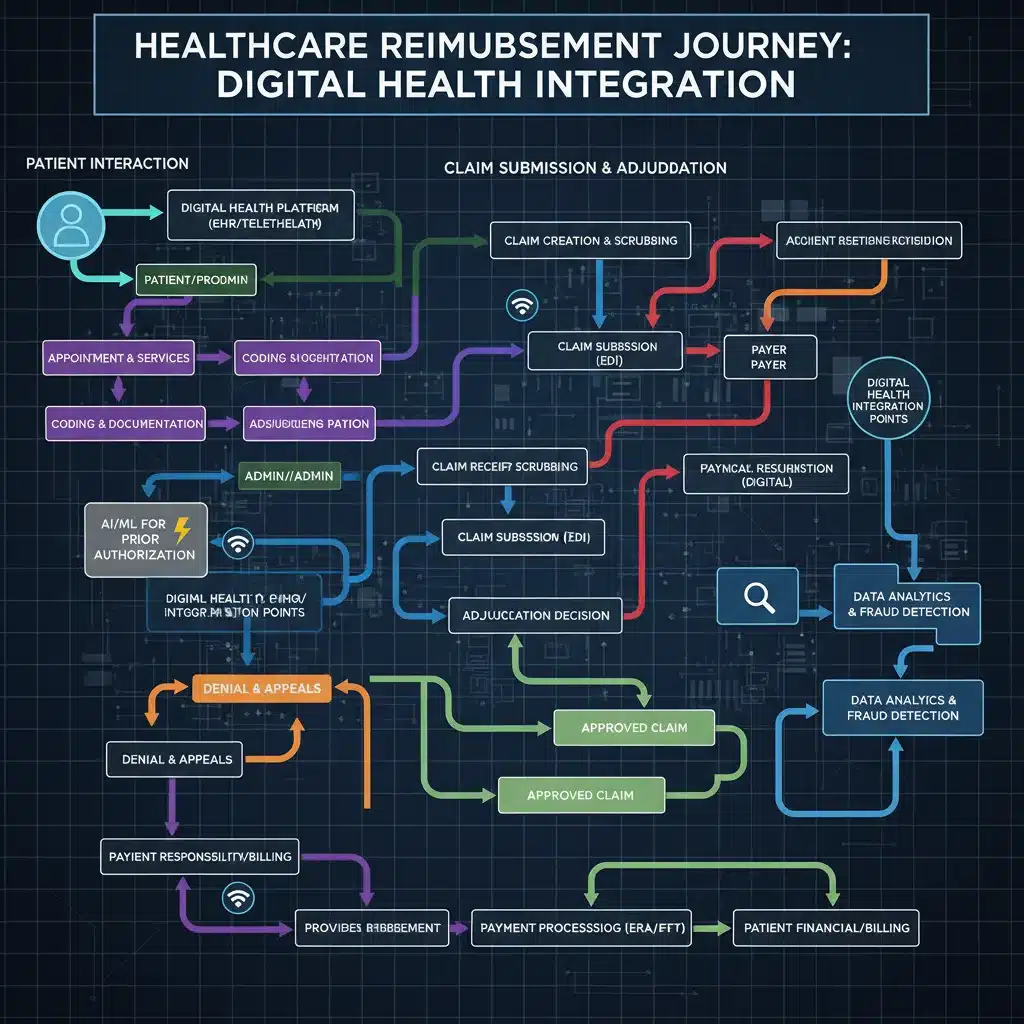
Strategies for Optimizing Digital Health Reimbursement
Achieving a 15% increase in revenue by 2026 through optimized digital health reimbursement requires a multi-faceted approach. Here are key strategies:
1. Comprehensive Payer Policy Research and Monitoring
Payer policies are not static. CMS, Medicaid agencies, and commercial insurers frequently update their guidelines. Organizations must dedicate resources to:
- Regularly review payer websites: Check for policy updates, medical necessity criteria, and covered services related to digital health.
- Engage with payer representatives: Build relationships with key contacts at major payers to understand their current and future plans for digital health coverage.
- Utilize third-party resources: Subscription services and industry associations often provide consolidated updates on payer policies.
- Track state-specific mandates: For multi-state operations, understanding the nuances of each state’s telehealth and digital health laws is paramount.
A robust system for tracking these changes will ensure that your billing practices remain compliant and that you capitalize on all available reimbursement opportunities.
2. Meticulous Documentation and Clinical Justification
Accurate and thorough documentation is the bedrock of successful reimbursement. For digital health services, this includes:
- Clinical Necessity: Clearly document why a digital health tool or service was medically necessary for the patient.
- Service Delivery Details: Record the date, time, duration, and mode of service delivery (e.g., synchronous video, asynchronous communication, RPM data transmission).
- Patient Consent: Ensure proper consent for telehealth and RPM services is obtained and documented.
- Intervention and Outcomes: Document the specific interventions provided through the digital tool and any observed patient outcomes or progress.
- Compliance with CPT Requirements: For RPM, ensure documentation supports the minimum data collection days, interactive communication time, and other specific requirements for codes like 99457/99458.
Poor documentation is a leading cause of claim denials. Investing in training for clinical and billing staff on digital health documentation best practices is crucial.
3. Strategic Code Selection and Bundling
Choosing the correct CPT code and applying appropriate modifiers can significantly impact reimbursement. This involves:
- Understanding Code Definitions: Thoroughly comprehending what each code covers and its limitations.
- Avoiding Upcoding/Downcoding: Billing for a service that is more or less complex than what was actually provided can lead to audits and penalties.
- Leveraging Ancillary Services: Identify opportunities to bill for additional services that are legitimately rendered in conjunction with digital health, such as care coordination (CPT 99487, 99489, 99490) or chronic care management (CPT 99491, 99484).
- Bundling Considerations: Be aware of codes that cannot be billed together (mutually exclusive) or services that are inherently part of another code.
Regular internal audits of coding practices can help identify areas for improvement and ensure compliance, thereby optimizing digital health reimbursement.
4. Technology Integration and Automation
Manual processes are prone to errors and inefficiencies. Implementing technology solutions can streamline digital health reimbursement:
- Electronic Health Records (EHR) Integration: Ensure your digital health platforms integrate seamlessly with your EHR system to facilitate documentation and charge capture.
- Automated Billing Systems: Utilize billing software that is updated with the latest CPT codes, modifiers, and payer rules for digital health.
- Revenue Cycle Management (RCM) Tools: Employ RCM solutions that can track claims, identify denial patterns, and automate appeals processes.
- AI and Machine Learning: Explore advanced tools that can help identify optimal coding combinations, predict denial risks, and provide insights into revenue opportunities.
Automation not only reduces administrative burden but also enhances accuracy and speeds up the reimbursement cycle.
Overcoming Challenges in Digital Health Reimbursement
While opportunities abound, several challenges persist in the realm of digital health reimbursement:
1. Evolving Regulatory Landscape
The rapid pace of technological innovation often outstrips the rate at which regulations and policies are updated. Staying compliant requires continuous education and agile operational adjustments. Organizations must be prepared for changes in coverage, coding, and payment rates.
2. Payer Variability
Despite federal guidelines, there remains significant variability among private payers and even across different state Medicaid programs. A service covered by one insurer might be denied by another. This necessitates a detailed understanding of each major payer’s specific policies and a tailored approach to billing.
3. Proving Clinical Value and ROI
For some digital health tools, particularly newer or more innovative ones, demonstrating clear clinical value and return on investment (ROI) is crucial for securing reimbursement. This often involves collecting robust data on patient outcomes, cost savings, and efficiency gains. Strong evidence can be used to advocate for coverage with payers and influence policy changes.
4. Patient Engagement and Adherence
The effectiveness of many digital health tools, particularly RPM and DTx, relies heavily on patient engagement and adherence. If patients do not consistently use the devices or engage with the platforms, the clinical data required for billing may not be generated, or the intended outcomes may not be achieved, impacting reimbursement potential.
5. Cybersecurity and Data Privacy Concerns
With digital health, the secure handling of patient data is paramount. Breaches can lead to severe penalties and loss of trust. Ensuring compliance with HIPAA and other data privacy regulations is not just a legal requirement but also a foundational element for maintaining payer and patient confidence, which indirectly supports reimbursement efforts.

Future Outlook: Achieving 15% Revenue Growth by 2026
Achieving a 15% increase in revenue from digital health reimbursement by 2026 is an ambitious yet attainable goal for organizations committed to strategic planning and execution. The trajectory of digital health adoption and the increasing recognition of its value by payers suggest a fertile ground for growth. Here’s how to position for future success:
1. Invest in Expertise and Training
The complexity of digital health reimbursement necessitates specialized knowledge. Invest in training your billing, coding, and clinical staff on the latest guidelines and best practices. Consider hiring dedicated digital health reimbursement specialists or partnering with expert consultants.
2. Proactive Advocacy and Collaboration
Engage with industry associations, advocacy groups, and policymakers to influence favorable reimbursement policies. Participate in pilot programs with payers to demonstrate the value of your digital health solutions. Collaboration with other providers and developers can also strengthen the collective voice for digital health reimbursement.
3. Data-Driven Decision Making
Leverage data analytics to understand your reimbursement performance. Analyze denial rates, identify common denial reasons, and track payment trends. Use this data to refine your coding strategies, improve documentation, and negotiate with payers. Quantifiable evidence of clinical efficacy and cost-effectiveness will be your strongest argument for expanded coverage and improved rates.
4. Embrace Interoperability
Seamless data exchange between digital health tools, EHRs, and billing systems is critical. Prioritize solutions that offer robust interoperability to reduce manual data entry, minimize errors, and ensure that all billable services are accurately captured and processed.
5. Explore Alternative Payment Models
Beyond traditional fee-for-service, explore participation in value-based care models, such as accountable care organizations (ACOs) or bundled payments, where digital health tools can play a significant role in achieving desired outcomes and cost savings, thereby qualifying for shared savings or performance bonuses. These models often provide more flexibility for integrating and reimbursing innovative digital solutions.
Conclusion
The journey to optimizing digital health reimbursement and achieving a substantial revenue increase by 2026 is multifaceted, demanding continuous learning, strategic adaptation, and meticulous execution. Digital health tools are no longer niche offerings; they are becoming integral to modern healthcare delivery. By mastering the intricacies of CPT codes, understanding payer policies, ensuring impeccable documentation, and leveraging technology, healthcare organizations can unlock the full financial potential of their digital health investments.
The path forward requires a commitment to excellence in every aspect of the revenue cycle, from initial patient engagement to final claim adjudication. By proactively addressing the challenges and strategically capitalizing on the opportunities presented by the evolving reimbursement landscape, providers and developers can not only secure their financial future but also significantly contribute to a more accessible, efficient, and effective healthcare system for all. The 15% revenue growth target is not just a number; it represents a tangible impact on the sustainability and scalability of digital health innovations that are transforming patient care.
Author