Cybersecurity in MedTech Education: Safeguarding Patient Data by 2026

Anúncios
Cybersecurity in MedTech Education: Safeguarding Patient Data by 2026
Anúncios
Anúncios
The healthcare landscape is undergoing a profound digital transformation, with medical technology (MedTech) at its forefront. From advanced diagnostic tools to remote patient monitoring systems, MedTech innovations are revolutionizing patient care, improving outcomes, and enhancing efficiency. However, this rapid digitization brings with it an unprecedented surge in cybersecurity risks, particularly concerning sensitive patient data. The imperative to integrate robust cybersecurity practices into MedTech education is no longer a luxury but a critical necessity, especially as we look towards safeguarding patient data in the US by 2026.
The sheer volume and sensitivity of health information make it an attractive target for cybercriminals. Breaches can lead to devastating consequences, including financial losses, reputational damage, and, most critically, compromised patient safety and privacy. This article delves into the intricate relationship between MedTech and cybersecurity, highlighting the urgent need for comprehensive MedTech Cybersecurity Education to build a resilient healthcare ecosystem capable of protecting patient data against evolving threats.
The Evolving Threat Landscape in MedTech
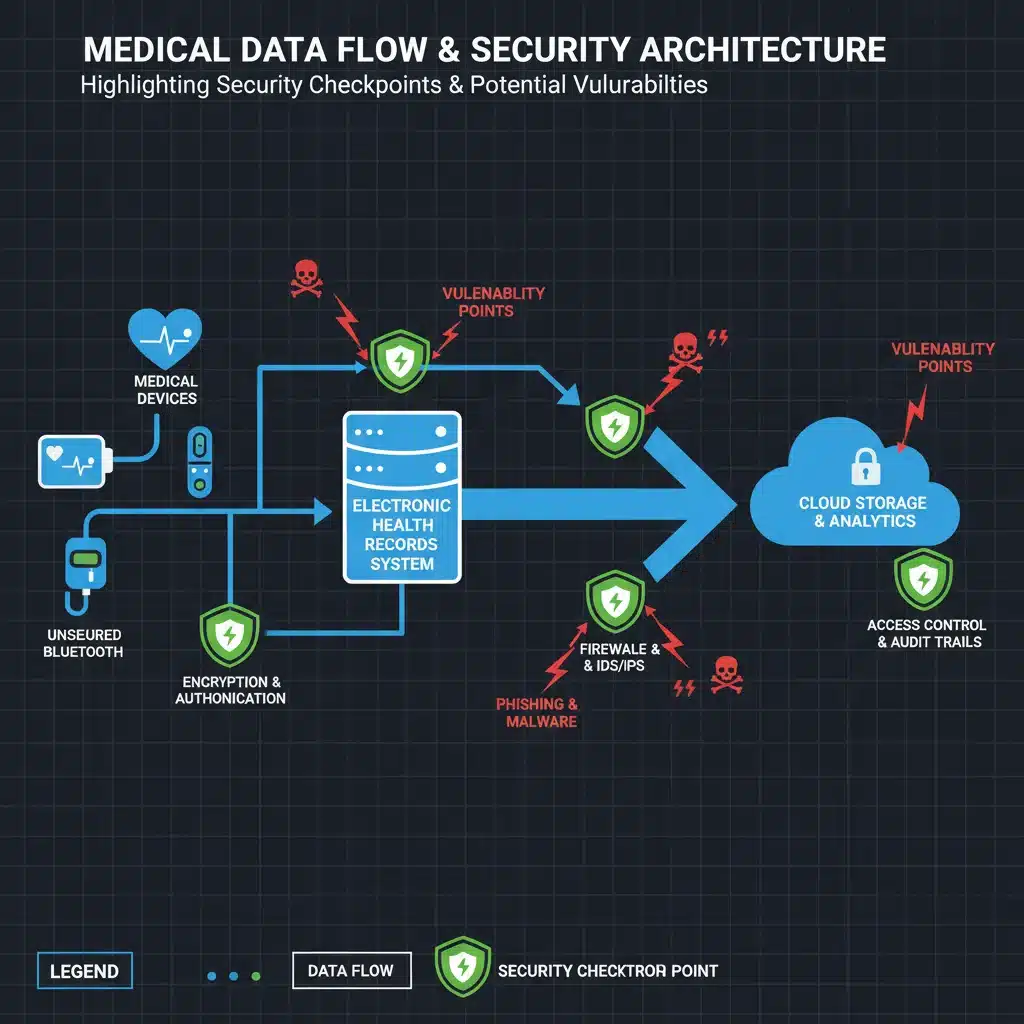
The proliferation of interconnected medical devices, often referred to as the Internet of Medical Things (IoMT), has expanded the attack surface for cyber adversaries. These devices, ranging from insulin pumps and pacemakers to MRI machines and surgical robots, collect, process, and transmit vast amounts of personal health information (PHI). While offering immense benefits, many IoMT devices were not designed with security as a primary consideration, making them vulnerable to exploitation.
Common Cyber Threats Facing MedTech:
- Ransomware Attacks: These attacks encrypt critical systems and data, demanding a ransom for their release. In healthcare, ransomware can disrupt patient care, delay surgeries, and even lead to fatalities.
- Data Breaches: Unauthorized access to patient records can expose sensitive information, leading to identity theft, fraud, and a loss of patient trust.
- Device Tampering: Malicious actors could potentially alter the functionality of medical devices, leading to incorrect dosages, misdiagnoses, or direct harm to patients.
- DDoS Attacks: Distributed Denial of Service attacks can render critical systems unavailable, disrupting essential healthcare services.
- Phishing and Social Engineering: Human error remains a significant vulnerability, with healthcare professionals often targeted by sophisticated phishing campaigns designed to steal credentials or implant malware.
The stakes are incredibly high. A cyberattack on a hospital or a MedTech device can move beyond financial loss to directly impact human lives. This reality underscores the urgency for specialized MedTech Cybersecurity Education that prepares current and future healthcare and technology professionals to anticipate, prevent, and respond to these threats effectively.
The Critical Need for Specialized MedTech Cybersecurity Education
Traditional cybersecurity education often focuses on general IT infrastructure, which, while valuable, does not fully address the unique challenges of the MedTech sector. Medical devices have distinct operating systems, communication protocols, and regulatory requirements (e.g., HIPAA, FDA guidance) that demand specialized knowledge. Therefore, developing targeted educational programs is paramount.
Key Areas of Focus for MedTech Cybersecurity Education:
- Device Security Lifecycle: Understanding security from device design and development through deployment, maintenance, and end-of-life.
- Regulatory Compliance: In-depth knowledge of healthcare-specific regulations like HIPAA, GDPR (if applicable for global companies), and FDA post-market surveillance requirements for cybersecurity.
- Threat Modeling and Risk Assessment: Techniques to identify potential vulnerabilities in medical devices and systems, and assess the likelihood and impact of attacks.
- Secure Coding Practices: For developers building MedTech software, ensuring security is baked in from the ground up.
- Network Security for IoMT: Securing the intricate networks that connect medical devices, hospital systems, and cloud platforms.
- Incident Response and Recovery: Developing robust plans to detect, respond to, and recover from cyberattacks with minimal disruption to patient care.
- Data Privacy and Ethics: A deep understanding of patient data rights, ethical considerations, and privacy-enhancing technologies.
- Interoperability Security: Addressing security challenges that arise when different medical devices and systems need to communicate and share data securely.
By focusing on these areas, MedTech Cybersecurity Education can equip a new generation of professionals with the skills needed to build, deploy, and manage secure medical technologies, ultimately contributing to the goal of safeguarding patient data in the US by 2026.
Current State of MedTech Cybersecurity Education in the US
While awareness is growing, dedicated MedTech Cybersecurity Education programs are still emerging. Many universities and vocational schools offer general cybersecurity degrees, but specialized tracks or certifications for healthcare are less common. This creates a significant skills gap, as the demand for professionals with this niche expertise far outstrips the current supply.

Challenges in Educational Development:
- Lack of Standardized Curriculum: There isn’t a universally accepted curriculum for MedTech cybersecurity, making it difficult to ensure comprehensive coverage across different institutions.
- Rapid Technological Evolution: The pace of innovation in MedTech and cybersecurity means that curricula can quickly become outdated.
- Faculty Expertise: Finding instructors with both deep cybersecurity knowledge and an understanding of the healthcare domain is challenging.
- Resource Constraints: Developing specialized labs and training environments that simulate real-world medical device networks can be expensive.
- Interdisciplinary Nature: MedTech cybersecurity requires collaboration between engineering, IT, medical, and legal departments, which can be complex to integrate into traditional academic structures.
Addressing these challenges requires a concerted effort from academic institutions, industry leaders, government bodies, and professional organizations. Collaborative initiatives are crucial to bridge the current educational gaps and foster a skilled workforce.
Strategies for Advancing MedTech Cybersecurity Education by 2026
To meet the 2026 deadline for enhanced patient data protection, several strategic initiatives must be prioritized to bolster MedTech Cybersecurity Education:
1. Developing Specialized Academic Programs:
- Degree Programs and Certifications: Universities should develop undergraduate and graduate degrees, as well as professional certifications, specifically in medical device cybersecurity, healthcare information security, or health informatics with a strong cybersecurity emphasis.
- Interdisciplinary Collaboration: Foster partnerships between engineering, computer science, medical schools, and public health departments to create holistic programs.
- Hands-on Labs and Simulations: Implement practical training environments where students can learn to identify vulnerabilities, perform risk assessments, and develop secure solutions for realistic medical device scenarios.
2. Industry-Academia Partnerships:
- Internships and Apprenticeships: Create opportunities for students to gain real-world experience in MedTech companies, hospitals, and cybersecurity firms specializing in healthcare.
- Curriculum Development: Industry experts should collaborate with academics to ensure curricula are relevant, up-to-date, and address current and future threats.
- Research Collaboration: Joint research initiatives can drive innovation in secure MedTech design and defense mechanisms.
3. Continuous Professional Development:
- Training for Existing Workforce: Provide ongoing training and reskilling programs for current healthcare IT professionals, biomedical engineers, and clinical staff on MedTech cybersecurity best practices.
- Vendor Training and Certification: MedTech manufacturers should offer security training and certifications specific to their devices and platforms.
- Conferences and Workshops: Support and promote events focused on sharing knowledge and best practices in healthcare cybersecurity.
4. Government and Regulatory Support:
- Funding for Research and Education: Government grants can stimulate research into MedTech cybersecurity and support the development of educational programs.
- Standardization and Guidance: Regulatory bodies like the FDA and NIST can provide updated guidance and frameworks for secure medical device development and deployment, which can inform educational content.
- Incentives for Adoption: Offer incentives for healthcare organizations to invest in cybersecurity training and secure MedTech solutions.
The Role of Stakeholders in Advancing MedTech Cybersecurity Education
Achieving the goal of robust patient data protection by 2026 requires a unified effort from various stakeholders:
MedTech Manufacturers:
Manufacturers have a fundamental responsibility to design and build secure devices from the outset. This includes implementing security-by-design principles, conducting thorough vulnerability testing, and providing clear security documentation and updates. They should also actively participate in educational initiatives by offering expertise, resources, and internship opportunities.
Healthcare Providers and Organizations:
Hospitals and clinics are on the front lines of patient care and data management. They must prioritize cybersecurity training for all staff, from clinicians to IT personnel. Implementing strong access controls, network segmentation, and regular security audits are crucial. They also play a vital role in providing real-world case studies and practical experience for students and professionals undergoing MedTech Cybersecurity Education.
Academic Institutions:
Universities and colleges are tasked with developing and delivering cutting-edge educational programs. They need to be agile in adapting curricula to the evolving threat landscape and fostering interdisciplinary collaboration. Investing in specialized faculty and state-of-the-art labs is essential for effective learning.
Government and Regulatory Bodies:
Government agencies set the regulatory framework and provide essential guidance. They can influence the cybersecurity posture of the MedTech sector through policies, enforcement, and funding. Their role in promoting national standards and best practices for MedTech Cybersecurity Education is indispensable.
Cybersecurity Professionals:
These experts bring invaluable knowledge and skills to the table. They can serve as educators, mentors, and consultants, helping to bridge the gap between theoretical knowledge and practical application in the MedTech domain.
Future Trends and Considerations for MedTech Cybersecurity Education
Looking beyond 2026, the landscape of MedTech and cybersecurity will continue to evolve. Educational programs must be forward-thinking to prepare professionals for emerging challenges.
Key Future Trends:
- Artificial Intelligence and Machine Learning in Security: Leveraging AI/ML for threat detection, anomaly identification, and automated response in MedTech environments.
- Quantum Computing Threats: Preparing for the potential of quantum computing to break current encryption standards and developing quantum-resistant cryptographic solutions.
- Edge Computing Security: As more processing occurs at the edge (closer to the patient and device), securing these decentralized environments becomes critical.
- Supply Chain Security: Ensuring the security of all components and software throughout the MedTech supply chain, from raw materials to deployed devices.
- Personalized Medicine and Data Privacy: The rise of personalized medicine will generate even more granular and sensitive patient data, demanding enhanced privacy-preserving techniques.
MedTech Cybersecurity Education must incorporate these futuristic elements to ensure that professionals are not just reacting to current threats but are also prepared to innovate and defend against those yet to emerge. This proactive approach is vital for long-term patient data protection and the sustained trust in MedTech advancements.
Conclusion: A Secure Future for Patient Data
The journey to securing patient data in the US by 2026 through robust MedTech cybersecurity education is ambitious but entirely achievable. It demands a collective commitment from all stakeholders to recognize the critical importance of this endeavor. By investing in specialized academic programs, fostering strong industry-academia partnerships, prioritizing continuous professional development, and securing government support, we can cultivate a workforce equipped with the knowledge and skills to defend against the complex and ever-evolving cyber threats.
The integration of cybersecurity into every facet of MedTech, from design to deployment and beyond, is not just a technical challenge but a fundamental ethical obligation. Protecting patient data is paramount to maintaining public trust in healthcare technology and ensuring the safety and well-being of individuals. Through comprehensive MedTech Cybersecurity Education, we can build a more secure, resilient, and trustworthy healthcare system for generations to come, ensuring that the promise of MedTech innovation is realized without compromising the privacy and safety of those it serves.
Author