MedTech R&D Budgets 2026: Financial Outlook for US Innovators

Forecasting MedTech R&D Budgets: A 2026 Financial Outlook for US Innovators
The landscape of medical technology (MedTech) is in a perpetual state of evolution, driven by relentless innovation, shifting regulatory paradigms, and an ever-increasing demand for advanced healthcare solutions. For US innovators, understanding the trajectory of MedTech R&D Budgets is not merely an academic exercise; it’s a critical strategic imperative. As we look towards 2026, a complex interplay of economic factors, technological advancements, and global health priorities will shape investment decisions and ultimately determine the pace and direction of medical innovation. This comprehensive analysis will delve into the anticipated financial outlook for MedTech R&D Budgets in the United States, offering insights into key trends, potential challenges, and strategic opportunities for companies navigating this dynamic sector.
The MedTech sector, characterized by its high capital intensity and long development cycles, relies heavily on robust R&D investment. These budgets fuel the discovery of new therapies, the development of cutting-edge diagnostic tools, and the refinement of existing medical devices that improve patient outcomes and enhance healthcare efficiency. In the US, a vibrant ecosystem of established corporations, nimble startups, academic institutions, and government agencies contributes to this innovation engine. However, the allocation and utilization of these MedTech R&D Budgets are subject to numerous influences, from venture capital availability and public market sentiment to evolving reimbursement policies and the imperative for digital transformation.
Our exploration will cover the macroeconomic forces at play, the impact of digitalization and AI on R&D expenditure, the strategic shifts in investment priorities, and the regulatory environment’s role in shaping financial decisions. By dissecting these multifaceted components, we aim to provide a clear, forward-looking perspective for stakeholders in the US MedTech industry, enabling them to make informed decisions and secure their competitive edge in a rapidly changing world.
Macroeconomic Headwinds and Tailwinds Affecting MedTech R&D Budgets
The broader economic climate significantly influences the availability and allocation of MedTech R&D Budgets. As 2026 approaches, several macroeconomic factors will likely exert both pressure and support on these crucial investments. On the one hand, persistent inflationary pressures, rising interest rates, and potential economic slowdowns could temper investor enthusiasm and increase the cost of capital, making it more challenging for companies, especially smaller startups, to secure funding. Supply chain disruptions, while showing signs of easing, could still impact the cost and availability of raw materials and components essential for R&D activities, further straining budgets.
Conversely, several tailwinds are expected to bolster MedTech R&D Budgets. The aging global population, particularly in developed nations like the US, continues to drive demand for innovative healthcare solutions for chronic diseases and age-related conditions. This demographic shift creates a sustained market pull for new medical devices, diagnostics, and digital health platforms. Moreover, increased public awareness and investment in pandemic preparedness and health security, spurred by recent global health crises, are likely to translate into continued funding for research into infectious diseases, rapid diagnostics, and vaccine technologies, often leveraging MedTech advancements.
Government initiatives and funding programs also play a pivotal role. The US government, through agencies like the National Institutes of Health (NIH) and the Biomedical Advanced Research and Development Authority (BARDA), often provides substantial grants and contracts for medical research and development. Policies designed to accelerate regulatory pathways for breakthrough devices or to incentivize domestic manufacturing could further stimulate R&D spending. Understanding the interplay of these forces is crucial for forecasting where MedTech R&D Budgets will be directed and how they will be structured in the coming years.
The Digital Transformation: A Catalyst for R&D Investment
The digital transformation is arguably the most profound change agent impacting MedTech R&D Budgets. Artificial intelligence (AI), machine learning (ML), big data analytics, and the Internet of Medical Things (IoMT) are no longer futuristic concepts but integral components of modern MedTech innovation. Companies are increasingly allocating significant portions of their R&D budgets towards integrating these technologies into their product development cycles and new offerings.
AI and ML are revolutionizing every stage of the MedTech R&D pipeline, from accelerating drug discovery and optimizing clinical trial design to enhancing diagnostic accuracy and personalizing treatment plans. For instance, AI-powered image analysis can detect subtle anomalies in medical scans, leading to earlier and more accurate diagnoses. In surgical robotics, AI algorithms are improving precision and enabling new minimally invasive procedures. Investing in these capabilities requires substantial upfront capital for talent acquisition (data scientists, AI engineers), infrastructure (cloud computing, specialized hardware), and software development. Consequently, we anticipate a continued surge in MedTech R&D Budgets specifically earmarked for digital health initiatives and AI integration.
The rise of digital therapeutics (DTx) also represents a new frontier for R&D investment. These software-based interventions deliver evidence-based therapeutic interventions to prevent, manage, or treat a medical disorder or disease. Developing and validating DTx products involves rigorous clinical trials, cybersecurity measures, and user experience design, all of which contribute to elevated R&D costs. Companies are recognizing the immense potential of DTx to improve patient access, adherence, and outcomes, leading to increased budget allocations in this area.
Strategic Shifts in MedTech R&D Priorities for 2026
Beyond the overarching influence of digitalization, specific therapeutic areas and technological platforms are expected to attract significant portions of MedTech R&D Budgets by 2026. Personalization and precision medicine remain key drivers. Companies are investing in diagnostics that can stratify patient populations, enabling targeted therapies and more effective treatment regimens. This includes advanced genomics, proteomics, and liquid biopsy technologies.
Minimally invasive procedures continue to gain traction, pushing R&D towards smaller, smarter, and more precise surgical tools and imaging technologies. Robotics, augmented reality (AR), and virtual reality (VR) are being integrated into surgical suites, offering enhanced visualization and dexterity. These areas demand substantial R&D expenditure due to the complexity of integrating hardware, software, and advanced sensor technologies.
Furthermore, the focus on value-based care models is reshaping R&D priorities. MedTech innovators are under pressure to demonstrate the economic value of their products, not just their clinical efficacy. This translates into R&D efforts aimed at developing devices and solutions that reduce hospital stays, prevent readmissions, improve chronic disease management, and ultimately lower overall healthcare costs. Real-world evidence generation and health economics outcomes research (HEOR) are becoming increasingly important components of the R&D process, influencing budget allocation.
Funding Mechanisms and Investment Strategies
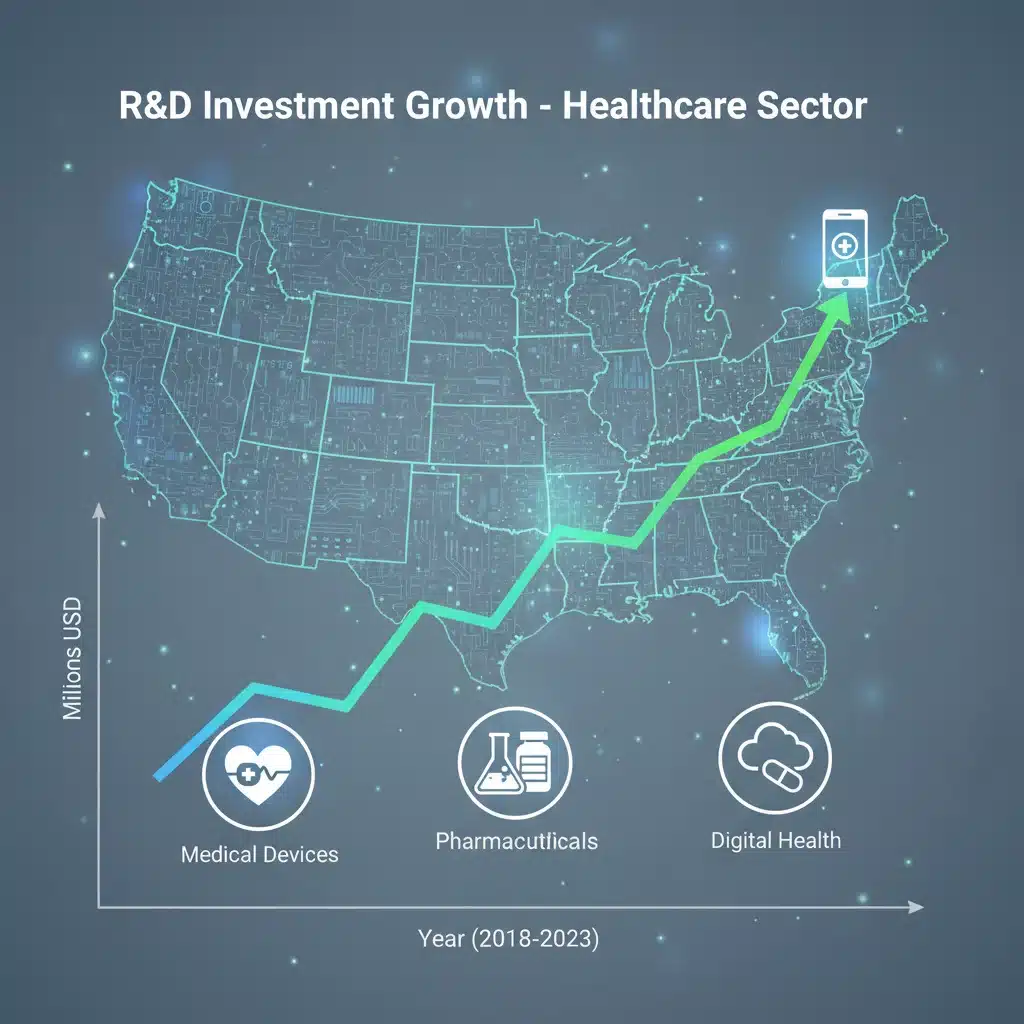
Securing adequate funding for R&D is a perennial challenge for MedTech companies. In 2026, a diverse array of funding mechanisms will continue to support MedTech R&D Budgets in the US. Large, established MedTech corporations typically fund R&D through internal cash flows, debt financing, and strategic partnerships. These companies often have dedicated R&D departments and long-term investment horizons, allowing them to pursue ambitious projects.
For startups and emerging companies, venture capital (VC) remains a critical source of funding. While the VC landscape can be cyclical, investor interest in promising MedTech innovations, particularly those leveraging AI or addressing unmet clinical needs, is expected to remain strong. However, VCs are increasingly scrutinizing business models and market pathways, demanding clearer value propositions and faster routes to commercialization. This pressure can influence how MedTech R&D Budgets are structured, favoring projects with shorter development timelines or demonstrable early-stage traction.
Public markets, through initial public offerings (IPOs) or follow-on offerings, also provide significant capital for MedTech R&D. However, market volatility and investor sentiment can impact the feasibility and attractiveness of these routes. Strategic alliances, joint ventures, and licensing agreements between large corporations and smaller innovators are also becoming more prevalent. These collaborations allow smaller companies to access resources and expertise, while larger players gain access to cutting-edge technologies without bearing the full R&D risk. These partnerships often involve shared R&D budgets and milestones, impacting financial planning.
Moreover, non-dilutive funding sources, such as government grants, academic collaborations, and philanthropic foundations, continue to play a vital role, especially for early-stage research or projects addressing public health priorities. Companies that can successfully leverage a combination of these funding mechanisms will be best positioned to sustain their MedTech R&D Budgets and accelerate innovation.
Navigating the Regulatory Landscape and its Financial Implications
The regulatory environment, primarily governed by the U.S. Food and Drug Administration (FDA), exerts a profound influence on MedTech R&D Budgets. The process of bringing a new medical device or diagnostic to market is notoriously complex, time-consuming, and expensive. Regulatory compliance costs, including clinical trials, submissions, and post-market surveillance, represent a significant portion of R&D expenditure.
As MedTech innovations become more sophisticated, particularly with the integration of AI and software as a medical device (SaMD), the FDA is continually evolving its regulatory frameworks. While efforts are being made to streamline pathways for novel technologies, companies must invest heavily in understanding and adhering to these evolving guidelines. This includes allocating budget for regulatory affairs specialists, quality assurance, and robust data management systems to ensure compliance.
Furthermore, the FDA’s emphasis on real-world evidence (RWE) and real-world data (RWD) is influencing clinical trial design and post-market studies. Generating RWE can be resource-intensive but offers the potential to accelerate regulatory approvals and demonstrate long-term product value. Companies must factor these evolving data requirements into their MedTech R&D Budgets. Changes in reimbursement policies by Medicare, Medicaid, and private insurers also directly impact R&D investment. A strong reimbursement pathway is critical for commercial success, and companies often conduct extensive health economic research during the R&D phase to demonstrate cost-effectiveness, which adds to budget outlays.
Talent Acquisition and Retention: A Budgetary Consideration
The success of any R&D endeavor hinges on the quality of its human capital. In the highly specialized field of MedTech, attracting and retaining top talent is a significant budgetary consideration. The demand for skilled engineers, data scientists, clinicians, regulatory experts, and project managers with expertise in medical devices, diagnostics, and digital health continues to outstrip supply. This competition for talent drives up salaries, benefits, and recruitment costs, directly impacting MedTech R&D Budgets.
Companies are increasingly investing in talent development programs, upskilling initiatives, and fostering collaborative work environments to retain their key personnel. Furthermore, the rise of remote and hybrid work models, while offering flexibility, also necessitates investment in robust cybersecurity infrastructure and collaborative digital tools to ensure productivity and data security within R&D teams. Strategic partnerships with academic institutions and research centers can also serve as a pipeline for talent and a means of leveraging external expertise, which can optimize internal R&D spending.

Emerging Technologies and Future Investment Areas
Looking further into 2026 and beyond, several emerging technologies are poised to capture a growing share of MedTech R&D Budgets. Beyond AI, areas such as advanced materials science, nanotechnology, and synthetic biology are opening new avenues for medical device innovation. For example, biocompatible materials with enhanced properties could lead to more durable implants, while nanobots could revolutionize targeted drug delivery.
The convergence of MedTech with other sectors, such as consumer electronics and telecommunications, is also creating new hybrid products and services. Wearable medical devices, remote patient monitoring systems, and telehealth platforms are examples of this convergence, demanding R&D investment in connectivity, data security, and user-friendly interfaces. The development of these integrated solutions often requires interdisciplinary teams and significant cross-sector collaboration, influencing budget allocation towards diverse expertise.
Furthermore, the growing emphasis on environmental, social, and governance (ESG) factors is beginning to influence R&D decisions. Companies are increasingly investing in sustainable product design, energy-efficient manufacturing processes, and devices that minimize environmental impact. While not directly clinical, these considerations are becoming critical for investor relations and market perception, subtly shaping how MedTech R&D Budgets are deployed.
Challenges and Risks to MedTech R&D Budget Growth
Despite the optimistic outlook for innovation, several challenges and risks could constrain the growth of MedTech R&D Budgets. Economic downturns, as mentioned, can lead to tighter capital markets and reduced investor appetite for risk. Geopolitical instability and trade tensions could disrupt global supply chains, increasing costs and delaying product development. Unforeseen regulatory hurdles or changes in intellectual property protection laws could also create significant headwinds.
Another critical challenge is the increasing complexity of clinical trials. As devices become more sophisticated and target smaller, more specific patient populations, the cost and duration of clinical studies can escalate. The need for larger, more diverse patient cohorts to ensure generalizability and address health equity concerns also adds to the budgetary burden. Companies must strategically plan their clinical development pathways to optimize resource allocation and mitigate financial risk.
Cybersecurity threats are also a growing concern for MedTech companies. As devices become more connected and data-intensive, the risk of cyberattacks and data breaches increases. Investing in robust cybersecurity measures throughout the R&D and product lifecycle is no longer optional; it’s a necessity, adding another layer of cost to MedTech R&D Budgets. Failure to adequately protect patient data and device integrity can lead to significant financial penalties, reputational damage, and loss of market trust.
Optimizing MedTech R&D Budget Allocation
Given the various pressures and opportunities, optimizing MedTech R&D Budgets is paramount for US innovators. This involves a multi-pronged approach that combines strategic foresight with efficient execution. Companies should prioritize projects with clear clinical unmet needs, strong market potential, and defensible intellectual property. Rigorous portfolio management, including regular reviews and go/no-go decisions, is essential to ensure resources are not wasted on underperforming projects.
Adopting agile R&D methodologies can help accelerate development cycles and reduce costs by allowing for iterative development and early feedback. Leveraging external partnerships, such as contract research organizations (CROs), academic collaborations, and technology incubators, can provide access to specialized expertise and infrastructure, potentially reducing in-house R&D expenses. Furthermore, investing in robust data analytics capabilities can help companies make data-driven decisions about R&D allocation, identifying areas of high return on investment and areas requiring optimization.
The integration of digital tools for project management, data sharing, and collaboration can also enhance efficiency across distributed R&D teams, reducing overheads and accelerating timelines. Finally, a strong focus on regulatory intelligence and early engagement with regulatory bodies can help anticipate potential hurdles and design R&D programs that are more likely to achieve timely market approval, thereby optimizing the return on R&D investment.
Conclusion: A Dynamic Future for MedTech R&D in the US
The 2026 financial outlook for MedTech R&D Budgets in the US is characterized by both immense opportunity and significant complexity. While macroeconomic pressures and regulatory challenges will persist, the underlying drivers of innovation – an aging population, technological advancements, and the pursuit of better patient outcomes – will continue to fuel substantial investment in the sector. Digital transformation, particularly the integration of AI and data analytics, will remain a dominant theme, reshaping how R&D is conducted and where resources are allocated.
US innovators who can strategically navigate these currents, embrace interdisciplinary collaboration, optimize funding strategies, and effectively manage regulatory complexities will be best positioned for success. The future of MedTech R&D is not just about increasing budgets, but about smarter, more targeted, and more efficient allocation of resources to bring life-changing medical technologies to patients. By understanding these trends and proactively adapting their strategies, US MedTech companies can ensure a vibrant and impactful future for medical innovation.