AI’s Economic Impact on US Healthcare Spending: A 2026 Financial Review

The Economic Impact of AI Integration on US Healthcare Spending: A 2026 Financial Review
The United States healthcare system, a colossal and complex entity, faces persistent challenges ranging from escalating costs to disparities in access and quality. As technology continues its relentless march forward, Artificial Intelligence (AI) has emerged as a transformative force, promising to reshape industries across the board. Within healthcare, AI’s potential is particularly profound, offering solutions that could revolutionize everything from diagnostics and treatment to operational efficiency and patient management. By 2026, the integration of AI is expected to have a significant and measurable economic impact on US healthcare spending, necessitating a thorough financial review to understand its implications.
This comprehensive analysis delves into the projected financial landscape of US healthcare in 2026, specifically focusing on how AI integration will influence spending. We will explore the various facets of AI’s economic footprint, including potential cost savings, the necessary investment in AI infrastructure, and the broader economic ramifications. Understanding the intricate interplay between AI technology and healthcare economics is crucial for policymakers, healthcare providers, investors, and patients alike. The goal is not merely to identify where AI will save money, but to understand the systemic shifts it will induce, leading to a more efficient, accessible, and ultimately, more affordable healthcare system.
Understanding the Current Landscape of US Healthcare Spending
Before we project the future, it’s essential to grasp the current state of US healthcare spending. The United States consistently outspends other developed nations on healthcare, with costs continuing to rise. In recent years, healthcare expenditures have constituted a significant portion of the nation’s Gross Domestic Product (GDP), placing immense pressure on individuals, businesses, and government budgets. Factors contributing to this high spending include the cost of new technologies, administrative complexities, rising drug prices, chronic disease prevalence, and an aging population. These factors create a fertile ground for disruptive technologies like AI to offer solutions that can bend the cost curve.
The administrative burden alone in US healthcare is staggering, accounting for a substantial percentage of overall spending. This includes everything from billing and coding to insurance verification and record-keeping. Clinical inefficiencies, such as misdiagnosis, unnecessary tests, and suboptimal treatment plans, also contribute significantly to wasted resources. Furthermore, the fee-for-service model often incentivizes volume over value, leading to potentially inflated costs. Against this backdrop, the promise of AI to streamline processes, improve diagnostic accuracy, and personalize care becomes not just an innovation, but a necessity for sustainable healthcare.
AI’s Role in Cost Reduction: A 2026 Outlook
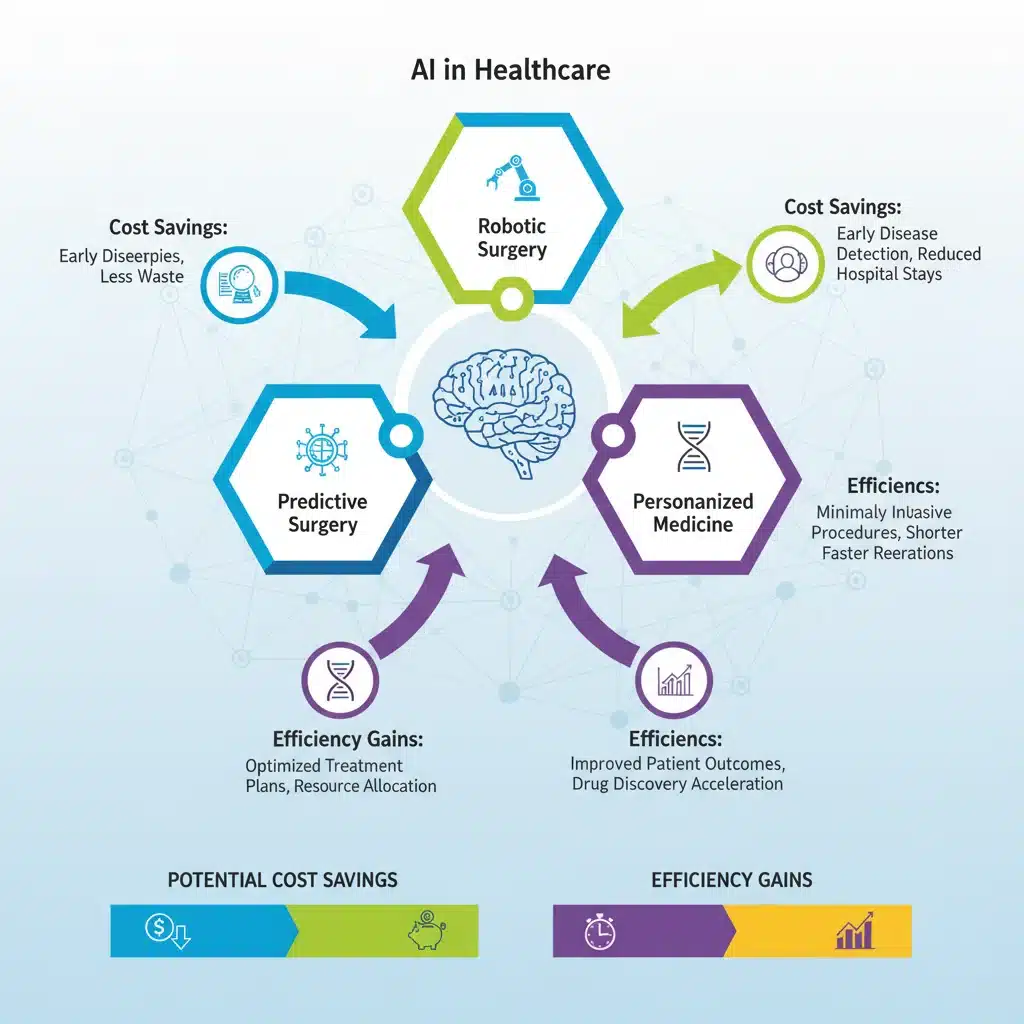
The most anticipated economic impact of AI in healthcare is its potential for significant cost reduction. By 2026, AI is expected to drive savings across multiple domains. One primary area is administrative efficiency. AI-powered tools can automate routine tasks such as scheduling, billing, and claims processing, reducing the need for extensive human intervention and minimizing errors. This automation can free up healthcare professionals to focus on patient care, leading to better outcomes and more efficient resource allocation. The reduction in administrative overhead alone could translate into billions of dollars in savings annually.
Beyond administration, AI’s diagnostic capabilities are poised to reduce costs associated with misdiagnosis and delayed treatment. AI algorithms, trained on vast datasets of medical images, patient records, and genomic information, can identify diseases with greater accuracy and speed than human clinicians in many cases. Early and accurate diagnosis can prevent the progression of diseases, reducing the need for more intensive and costly interventions down the line. For example, AI in radiology can flag suspicious findings on scans that might be missed by the human eye, leading to earlier cancer detection and improved prognosis, thereby lowering overall treatment costs.
Another significant area of cost savings stems from personalized medicine. AI can analyze a patient’s genetic profile, lifestyle, and medical history to recommend highly individualized treatment plans. This precision medicine approach can reduce the trial-and-error often associated with traditional treatments, minimizing ineffective therapies and adverse drug reactions. By tailoring treatments to individual patients, AI can optimize therapeutic outcomes, shorten recovery times, and decrease hospital readmissions, all of which contribute to substantial cost reductions. The ability to predict which patients will respond best to certain medications or interventions ensures that resources are allocated more effectively.
Preventive care also stands to benefit immensely from AI. By identifying individuals at high risk for chronic conditions based on their health data, AI can enable targeted interventions and lifestyle modifications. This proactive approach can prevent the onset or progression of diseases like diabetes, heart disease, and hypertension, which are major drivers of healthcare spending. Predictive analytics, powered by AI, can forecast disease outbreaks, allowing public health officials to implement timely preventive measures and mitigate large-scale health crises, further demonstrating AI healthcare spending’s positive influence.
Investment in AI Infrastructure: The Upfront Cost
While AI promises significant cost savings, achieving these benefits requires substantial upfront investment in AI infrastructure, research and development, and workforce training. By 2026, healthcare organizations will have poured considerable capital into integrating AI technologies. This investment includes purchasing and developing AI software, acquiring specialized hardware (such as high-performance computing systems), and upgrading existing IT infrastructure to support AI applications. The initial outlay can be a barrier for some institutions, particularly smaller hospitals or those in underserved areas.
Furthermore, the development of robust and secure data platforms is paramount. AI algorithms thrive on data, and the healthcare industry generates an enormous amount of it. However, this data is often siloed, unstructured, and subject to strict privacy regulations. Investing in data interoperability solutions, secure cloud storage, and advanced data analytics platforms is crucial for AI to function effectively. Without a solid data foundation, the potential of AI remains largely untapped. This investment in data infrastructure is a non-negotiable component of successful AI integration.
Training the healthcare workforce is another critical investment. Clinicians, administrators, and IT staff all need to be educated on how to effectively use and interact with AI tools. This involves not only technical training but also fostering a culture of acceptance and collaboration between human and artificial intelligence. The transition to an AI-augmented healthcare system requires a paradigm shift in how healthcare professionals operate, moving from solely human-driven decisions to informed decisions supported by AI insights. This human capital investment, though intangible, is as vital as the technological investment for optimizing AI healthcare spending.
Research and development (R&D) in AI for healthcare also demands significant funding. This includes developing new algorithms, validating their effectiveness in clinical trials, and ensuring their ethical deployment. The regulatory landscape for AI in healthcare is still evolving, and companies must invest in navigating these complexities to bring safe and effective AI solutions to market. Government grants, private sector venture capital, and partnerships between academic institutions and industry will be crucial in fueling this R&D, ensuring that AI’s potential is fully realized by 2026.
AI’s Impact on Pharmaceutical and Medical Device Spending
The pharmaceutical industry is another sector where AI integration will significantly alter spending patterns by 2026. AI is revolutionizing drug discovery and development, a process traditionally characterized by high costs, long timelines, and a high failure rate. AI algorithms can identify potential drug candidates more efficiently, predict their efficacy and toxicity, and accelerate preclinical testing. This can dramatically reduce the R&D costs associated with bringing new drugs to market, potentially leading to more affordable medications in the long run. The optimization of clinical trial design and patient recruitment using AI can also shorten development cycles and lower costs.
Furthermore, AI can personalize drug prescriptions. By analyzing a patient’s genetic makeup and other biological markers, AI can predict how they will respond to specific drugs, minimizing adverse reactions and maximizing therapeutic benefit. This approach reduces wasted prescriptions and improves patient outcomes, indirectly contributing to lower overall healthcare spending. The ability to identify non-responders early on can save significant costs associated with ineffective treatments.
In the medical device sector, AI is driving innovation in everything from surgical robots to wearable health trackers. AI-powered medical devices can offer more precise diagnostics, less invasive surgical procedures, and continuous patient monitoring. While the initial cost of these advanced devices might be higher, their long-term benefits in terms of improved patient outcomes and reduced complications can lead to overall cost savings. For example, robotic surgery, guided by AI, can lead to shorter hospital stays and faster recovery times, reducing post-operative care costs. The data collected by AI-enabled wearables can also empower individuals to manage their health proactively, preventing costly acute events.
Ethical Considerations and Regulatory Challenges in AI Healthcare Spending
As AI becomes more deeply embedded in US healthcare, several ethical considerations and regulatory challenges will shape its economic impact. Ensuring data privacy and security is paramount. The use of vast amounts of sensitive patient data by AI systems raises concerns about potential breaches and misuse. Robust cybersecurity measures and stringent data governance frameworks are essential to build trust and ensure the ethical deployment of AI. Investing in these security protocols is an indirect but necessary component of AI healthcare spending.
Algorithmic bias is another critical ethical concern. If AI algorithms are trained on biased datasets, they can perpetuate or even amplify existing health disparities, leading to unequal access to care or suboptimal treatment for certain demographic groups. Addressing bias requires careful algorithm design, diverse training data, and continuous monitoring. The economic cost of failing to address bias could be significant, leading to increased healthcare costs for specific populations and legal challenges.
The question of accountability for AI-driven decisions also needs to be resolved. If an AI system makes an error that leads to patient harm, who is responsible? Is it the developer, the physician who used the AI, or the hospital? Clear legal and ethical frameworks are needed to delineate responsibility, which will influence insurance premiums and liability costs within the healthcare system. The absence of such clarity could hinder the widespread adoption of AI, thereby limiting its potential for cost savings.
Regulatory bodies like the FDA are actively working to establish guidelines for the approval and oversight of AI-powered medical devices and software. The pace of technological innovation often outstrips the speed of regulatory development, creating a dynamic environment. Healthcare organizations and AI developers must invest in navigating these evolving regulations to ensure compliance and avoid costly penalties, which also contributes to the overall AI healthcare spending picture. Striking a balance between fostering innovation and ensuring patient safety is a delicate act.
AI and Workforce Transformation: Economic Implications
The integration of AI into healthcare will undoubtedly transform the healthcare workforce, with significant economic implications. While some fear job displacement, the more likely scenario is job augmentation and the creation of new roles. AI will automate repetitive and data-intensive tasks, freeing up healthcare professionals to focus on more complex, empathetic, and human-centric aspects of care. This shift will require reskilling and upskilling initiatives for the existing workforce, representing a substantial investment in human capital.
New roles will emerge, such as AI trainers, data scientists specializing in healthcare, AI ethics officers, and human-AI collaboration specialists. These positions will require specialized skills and will command competitive salaries, influencing overall healthcare labor costs. However, by optimizing workflows and improving efficiency, AI can allow healthcare systems to do more with existing staff or even expand services without a proportional increase in personnel, ultimately leading to a more productive workforce. The economic benefit here is derived from increased productivity and better utilization of highly skilled professionals.
The potential for physician burnout, a growing concern in healthcare, could also be mitigated by AI. By offloading administrative burdens and providing decision support, AI can reduce the cognitive load on clinicians, allowing them to spend more time directly interacting with patients and less time on paperwork. A less burnt-out workforce is a more productive and healthier workforce, leading to improved patient care and reduced attrition rates, which have their own significant economic costs. The impact on AI healthcare spending from improved workforce well-being is often overlooked but critical.
Furthermore, AI can facilitate continuous learning and professional development. AI-powered platforms can provide personalized training modules, simulate complex medical scenarios, and offer real-time clinical insights, helping healthcare professionals stay abreast of the latest advancements. This ongoing education is vital for maintaining high standards of care and adapting to new medical knowledge, contributing to a more skilled and efficient workforce, and indirectly impacting the efficiency of AI healthcare spending.

The Broader Economic Ripple Effects of AI in US Healthcare
The economic impact of AI in US healthcare extends beyond direct cost savings and investments, creating broader ripple effects across the economy. A healthier population, resulting from improved diagnostic accuracy, personalized treatments, and enhanced preventive care, leads to a more productive workforce. Reduced illness and disability mean fewer lost workdays, increased economic participation, and higher overall economic output. This societal benefit is a significant, albeit indirect, economic gain attributable to AI integration.
Innovation in healthcare can also stimulate economic growth. The development and deployment of AI technologies in healthcare create new industries, jobs, and investment opportunities. Startups focused on AI-powered medical solutions, data analytics, and digital health platforms will proliferate, driving technological advancement and contributing to the overall economy. This innovation ecosystem can attract global talent and investment, further bolstering the US economy.
Moreover, AI can improve health equity. By making healthcare more efficient and accessible, AI can help bridge gaps in care for underserved populations. Telemedicine, powered by AI, can extend specialist care to remote areas, reducing travel costs and improving access. AI-driven diagnostic tools can be deployed in resource-limited settings, offering sophisticated analysis where human expertise might be scarce. While the initial deployment might require investment, the long-term societal benefits of increased health equity are profound, reducing the economic burden of preventable diseases and improving overall community well-being, thus optimizing AI healthcare spending for societal good.
The global competitiveness of the US healthcare system also stands to benefit. By leading in AI integration, the US can maintain its position as a global innovator in medical technology and research. This leadership can attract international patients, researchers, and investment, further strengthening the US economy. The reputation for cutting-edge healthcare can have a positive impact on various sectors, from medical tourism to pharmaceutical exports.
Challenges and Mitigating Risks to Realize AI Healthcare Spending Benefits
Despite the immense potential, several challenges must be addressed to fully realize the economic benefits of AI in US healthcare by 2026. Data fragmentation remains a significant hurdle. Healthcare data is often stored in disparate systems, making it difficult for AI algorithms to access and analyze comprehensive patient information. Investing in interoperability standards and health information exchanges is crucial to unlock the full power of AI. Without unified data, AI’s effectiveness will be limited, and its economic impact constrained.
Resistance to change within healthcare organizations can also slow down AI adoption. Concerns about job security, the complexity of new technologies, and the need for new workflows can create barriers. Effective change management strategies, clear communication, and demonstrating the tangible benefits of AI are essential to overcome this resistance. A phased implementation approach, coupled with pilot programs, can help build confidence and facilitate smoother transitions.
The high cost of initial investment, as discussed earlier, can be a deterrent. Healthcare systems, particularly those with tight budgets, may struggle to allocate the necessary funds for AI infrastructure and training. Government incentives, public-private partnerships, and innovative financing models will be crucial to help organizations overcome this financial barrier and accelerate AI adoption. Without adequate funding, the promise of reduced AI healthcare spending might remain largely theoretical.
Finally, the need for continuous oversight and ethical governance cannot be overstated. As AI systems become more autonomous, ensuring their safety, fairness, and transparency will be an ongoing challenge. Regular audits, robust monitoring systems, and clear accountability frameworks are necessary to build and maintain public trust. The economic cost of a major AI failure or ethical breach could be catastrophic, undermining all the potential benefits. Proactive risk mitigation is key to ensuring a positive economic impact.
Conclusion: A Transformative Future for US Healthcare Spending with AI
By 2026, the integration of AI into the US healthcare system is poised to usher in a new era of efficiency, precision, and affordability. While significant upfront investments in infrastructure, data, and workforce training are required, the projected cost savings across administrative tasks, diagnostics, personalized medicine, and preventive care are substantial. AI’s ability to streamline operations, enhance clinical decision-making, and accelerate drug discovery will fundamentally reshape the financial landscape of healthcare.
The economic impact of AI healthcare spending extends far beyond direct financial metrics, leading to a healthier and more productive population, stimulating innovation, and fostering greater health equity. However, realizing these benefits hinges on successfully navigating complex ethical considerations, regulatory challenges, and the need for continuous adaptation and investment. The journey towards an AI-augmented healthcare system is not without its hurdles, but the potential rewards – a more sustainable, accessible, and high-quality healthcare system for all Americans – make it an imperative pursuit. The financial review of 2026 will undoubtedly highlight AI as a pivotal force in driving this transformation, marking a significant step towards a future where healthcare is not only advanced but also economically viable.