MedTech Education for Nurses: Boost Your Earning Potential by 15%
Anúncios
Financial Impact of Specialized Training: How U.S. Nurses Can Increase Earning Potential by 15% with MedTech Education
In the dynamic landscape of modern healthcare, the role of nurses is continuously evolving. Beyond traditional patient care, nurses are increasingly becoming integral to the operation and implementation of sophisticated medical technologies. This shift has not only broadened their responsibilities but has also created unprecedented opportunities for professional growth and, significantly, enhanced earning potential. For U.S. nurses looking to elevate their careers and financial standing, specialized MedTech education is no longer an optional add-on but a strategic imperative. This comprehensive guide delves into how investing in MedTech nurse training can lead to a remarkable increase in income, potentially boosting earnings by 15% or more, while also opening doors to rewarding and impactful career paths.
Anúncios
Anúncios
The healthcare industry is experiencing a rapid technological revolution. From advanced diagnostic tools and robotic surgery systems to sophisticated electronic health records (EHR) and telehealth platforms, medical technology (MedTech) is at the forefront of improving patient outcomes and streamlining clinical workflows. Nurses, as the primary caregivers and often the first point of contact with these technologies, are uniquely positioned to leverage this trend. However, to truly capitalize on these advancements, general nursing skills must be augmented with specialized knowledge and proficiency in MedTech. This is where MedTech nurse training becomes invaluable.
The Evolving Role of Nurses in a Tech-Driven Healthcare System
Gone are the days when a nurse’s primary tools were limited to a thermometer and a stethoscope. Today, nurses routinely interact with complex machinery, interpret data from advanced monitoring systems, and utilize cutting-edge software to manage patient information and coordinate care. This technological integration demands a new set of competencies. Nurses are now expected to:
- Operate and troubleshoot advanced medical devices.
- Understand the principles behind various diagnostic and therapeutic technologies.
- Effectively use electronic health records (EHR) and other digital platforms.
- Participate in the implementation and optimization of new MedTech solutions.
- Educate patients and their families on the use of personal medical devices.
Without specialized MedTech education, nurses may find themselves struggling to keep pace with these demands, potentially limiting their career progression and earning capacity. Conversely, those who embrace and pursue specialized MedTech training are becoming indispensable assets to healthcare institutions, commanding higher salaries and enjoying greater job security.
Quantifying the Financial Advantage: A 15% Earning Boost
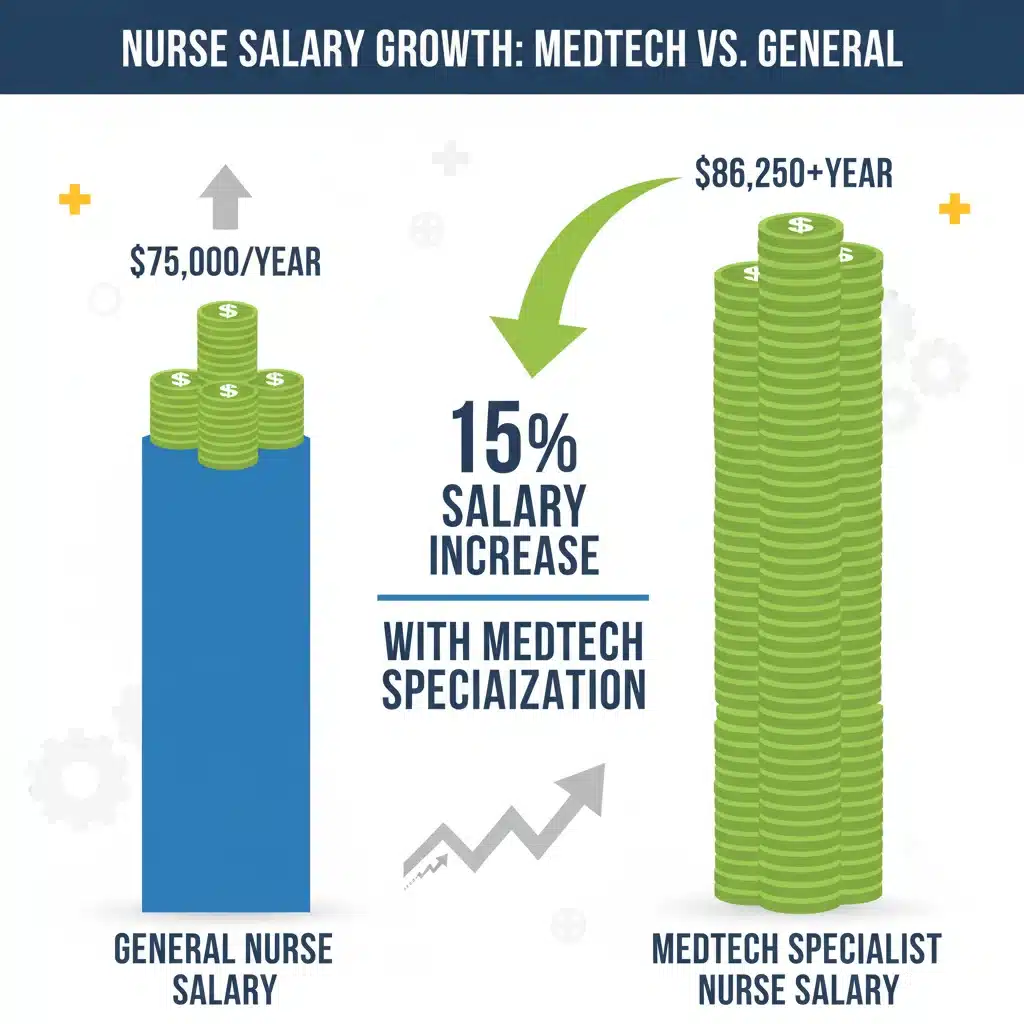
The promise of a 15% increase in earning potential for U.S. nurses with MedTech specialization is not an arbitrary figure; it’s a conservative estimate based on industry trends, salary data, and the high demand for technologically proficient healthcare professionals. Several factors contribute to this significant financial advantage:
- Increased Demand for Specialized Skills: As hospitals and clinics invest heavily in new technologies, they require nurses who can expertly operate and manage these systems. This creates a supply-demand imbalance where nurses with MedTech skills are highly sought after, leading to competitive salaries.
- Expanded Roles and Responsibilities: Nurses with advanced MedTech knowledge often take on roles with greater responsibility, such as clinical informatics specialists, device trainers, or even research coordinators for new medical technologies. These positions typically come with higher pay scales than general nursing roles.
- Certification and Specialization Bonuses: Many healthcare organizations offer bonuses or higher base salaries for nurses who hold specialized certifications in areas like critical care technology, medical device reprocessing, or clinical informatics, all of which fall under the umbrella of MedTech nurse training.
- Negotiating Power: With a unique and valuable skill set, nurses with MedTech expertise have stronger negotiating power during salary discussions and job offers.
- Career Advancement Opportunities: MedTech education opens pathways to leadership and management positions within technology-focused departments, further increasing earning potential over the long term.
While the exact percentage can vary based on location, experience, and the specific area of MedTech focus, a 15% increase is a realistic and achievable goal for nurses who commit to this specialized training.
Pathways to MedTech Nurse Training
For U.S. nurses interested in pursuing MedTech nurse training, various educational pathways and certifications are available. The best route depends on individual career goals, current experience, and time availability:
1. Continuing Education Courses and Workshops
Many universities, professional organizations, and MedTech companies offer short-term courses and workshops focused on specific medical devices or technological platforms. These are excellent for acquiring targeted skills quickly and staying updated on emerging technologies. Examples include:
- Certifications in specific EHR systems (e.g., Epic, Cerner).
- Workshops on advanced patient monitoring equipment.
- Training programs for robotic surgical assistants (for perioperative nurses).
2. Specialized Certifications
Several organizations offer certifications that validate a nurse’s expertise in a particular area of MedTech. These certifications are often highly regarded by employers and can directly impact earning potential. Notable certifications include:
- Informatics Nursing Certification (RN-BC): Offered by the American Nurses Credentialing Center (ANCC), this certification validates knowledge in the field of nursing informatics, which is crucial for leveraging technology in healthcare.
- Certified Clinical Research Coordinator (CCRC): For nurses interested in the intersection of technology and clinical trials.
- Specialty Certifications in Critical Care Technology: For nurses working with advanced life support systems, ventilators, and other critical care devices.
3. Graduate Programs (MSN, DNP with Informatics Focus)
For nurses aiming for leadership roles, advanced practice, or positions in clinical informatics, pursuing a Master of Science in Nursing (MSN) or a Doctor of Nursing Practice (DNP) with a specialization in nursing informatics or health technology is an excellent investment. These programs provide a deep understanding of data analytics, system implementation, project management, and technology leadership. Graduates of these programs are often at the forefront of MedTech innovation and command the highest salaries.
4. On-the-Job Training and Vendor-Specific Programs
Many hospitals and healthcare systems offer extensive on-the-job training for new technologies. Additionally, MedTech manufacturers often provide specialized training for their products. While not always formal certifications, these experiences are crucial for developing practical skills and can be a stepping stone to more formal MedTech education.
Key Areas of MedTech Specialization for Nurses
The field of MedTech for nurses is vast and offers numerous specialization opportunities. Identifying the right area for you can maximize your career growth and financial returns:
1. Clinical Informatics Nursing
This specialty focuses on the intersection of nursing science, computer science, and information science. Clinical informatics nurses play a pivotal role in optimizing EHR systems, developing clinical decision support tools, and ensuring data integrity. Their expertise is critical for improving patient safety, efficiency, and quality of care. Roles include Clinical Informatics Specialist, EHR Trainer, and Chief Nursing Informatics Officer (CNIO).
2. Telehealth and Remote Patient Monitoring
With the rise of telehealth, nurses skilled in remote patient monitoring (RPM) technologies are in high demand. This involves using digital tools to collect health data from individuals in their homes, monitor chronic conditions, and provide virtual care. Nurses in this field require proficiency in various RPM devices, telehealth platforms, and data interpretation.
3. Medical Device Specialization
This involves becoming an expert in specific types of medical devices, such as:
- Cardiac Devices: Pacemakers, defibrillators, heart monitors.
- Respiratory Devices: Ventilators, CPAP machines, oxygen delivery systems.
- Surgical Robotics: Assisting in and managing robotic-assisted surgeries.
- Diagnostic Imaging: Assisting with or understanding the technology behind MRI, CT scans, and ultrasounds.
Nurses with this specialization often work directly with patients, train other staff, or even work for MedTech companies in clinical support or sales roles.
4. Data Analytics and Predictive Modeling
As healthcare generates vast amounts of data, nurses with skills in data analytics can help interpret trends, identify risks, and contribute to evidence-based practice. This area is crucial for improving population health, resource allocation, and preventive care strategies.
5. Cybersecurity in Healthcare
Protecting patient data and healthcare systems from cyber threats is paramount. Nurses with a background in cybersecurity can help ensure the integrity and privacy of electronic health information, a critical and growing need in all healthcare settings.
The Investment in MedTech Education: Time and Cost
While the financial rewards of MedTech nurse training are significant, it’s important to acknowledge the investment required in terms of time and cost. Continuing education courses can range from a few hundred to a few thousand dollars and typically take weeks to months to complete. Specialized certifications might cost similar amounts for exams and study materials, plus preparation time. Graduate programs, on the other hand, represent a more substantial investment, potentially costing tens of thousands of dollars and requiring one to three years of dedicated study.
However, consider this investment as a strategic career move. The boosted earning potential, coupled with increased job satisfaction and career advancement opportunities, often provides an excellent return on investment (ROI). Many healthcare organizations also offer tuition reimbursement programs or scholarships for nurses pursuing specialized education, making the financial burden more manageable.
Real-World Impact and Career Opportunities
Beyond the financial gains, MedTech education empowers nurses to play a more influential role in shaping the future of healthcare. They become key players in:
- Improving Patient Safety: By understanding how technology can reduce errors and improve care delivery.
- Enhancing Efficiency: By optimizing workflows and leveraging digital tools to free up time for direct patient care.
- Driving Innovation: By contributing to the development and implementation of new technologies.
- Advocating for Patients: By ensuring technology is used ethically and effectively to meet patient needs.
Career paths for nurses with MedTech skills are diverse and expanding. They can work in:
- Hospitals and Clinics: As clinical informatics nurses, device specialists, or unit-based technology experts.
- MedTech Companies: In roles such as clinical application specialists, product development, sales, or training.
- Academic Institutions: As educators or researchers focusing on health technology.
- Consulting Firms: Advising healthcare organizations on technology implementation and optimization.
- Government Agencies: Contributing to health policy related to medical technology.
The demand for these roles is projected to grow significantly, ensuring a robust job market for nurses who invest in MedTech nurse training.
Overcoming Challenges and Embracing the Future
While the benefits are clear, pursuing MedTech education may present challenges, such as balancing work with studies, keeping up with rapid technological changes, and adapting to new roles. However, the proactive nurse who embraces these challenges will find immense rewards.
To succeed, nurses should:
- Stay Curious: Continuously seek out new information and training opportunities.
- Network: Connect with other MedTech-focused professionals and join relevant professional organizations.
- Be Adaptable: The MedTech landscape is constantly evolving, requiring a flexible mindset.
- Advocate for Technology: Be a champion for the effective and ethical use of technology in their workplaces.
The future of nursing is inextricably linked with technology. Nurses who proactively acquire MedTech skills will not only secure their financial future but also position themselves as leaders and innovators in healthcare.
Conclusion: Unleash Your Earning Potential with MedTech Education
For U.S. nurses, the opportunity to significantly increase earning potential by 15% or more through specialized MedTech education is a compelling proposition. Beyond the financial benefits, this training empowers nurses to take on more impactful roles, contribute to cutting-edge healthcare delivery, and become indispensable assets in a technologically advanced medical world. By investing in MedTech nurse training, you’re not just enhancing your resume; you’re future-proofing your career, expanding your professional horizons, and ultimately, playing a crucial role in shaping better patient outcomes. The time to specialize is now. Embrace the future of nursing and unlock your full potential.
Consider exploring various MedTech programs and certifications that align with your interests and career aspirations. The journey to becoming a specialized MedTech nurse is a rewarding one, both professionally and financially. Don’t miss out on the opportunity to be at the forefront of healthcare innovation.
Author